

About

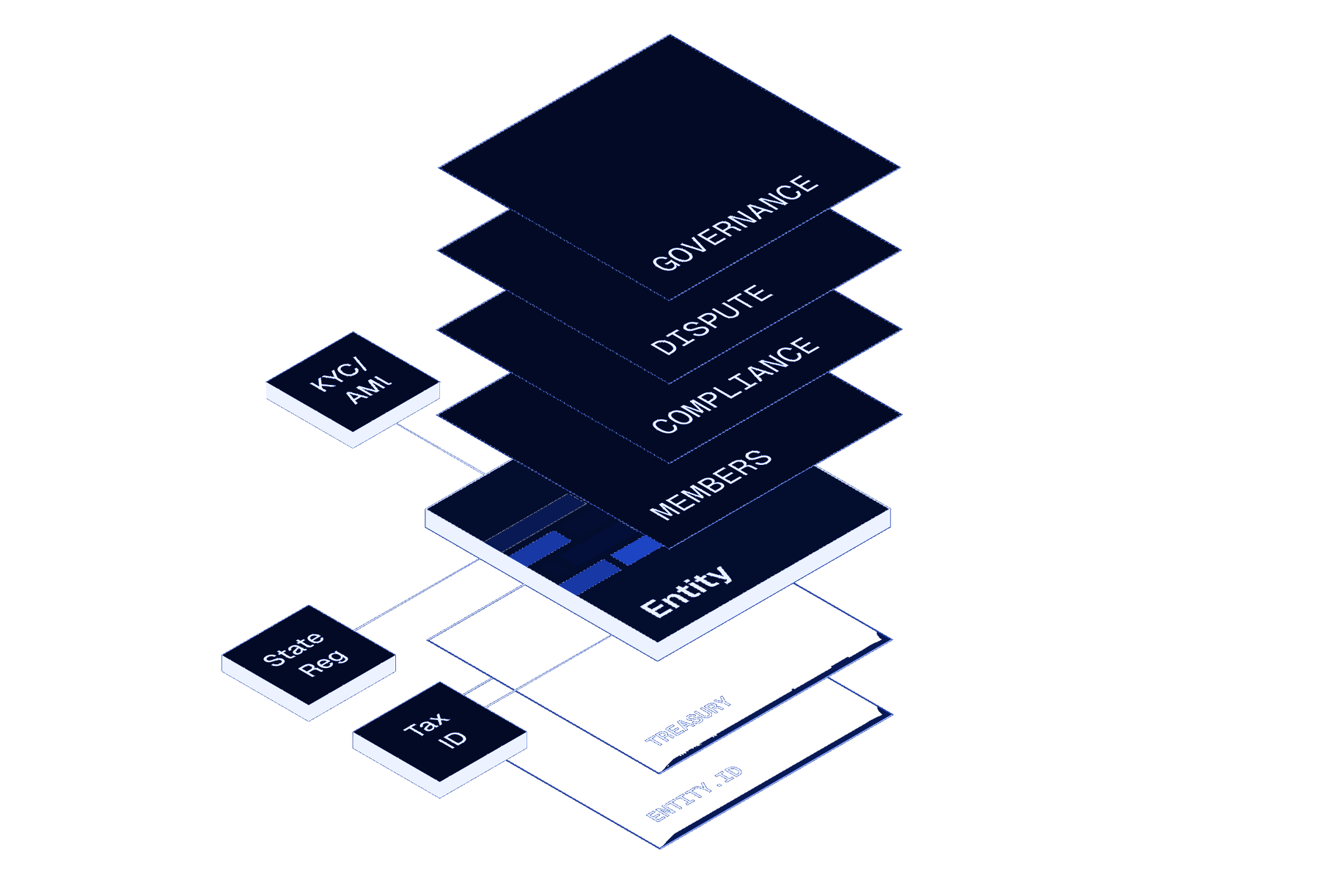
What a record holds.
An entity is a base with layers: members, compliance, dispute, governance. Its treasury sits underneath and its name on the registry. When it incorporates, the jurisdiction plugs in at the side. Nothing is rebuilt.
One record. Every layer an entity needs to exist and act.
Entities power the world. They still run on PDFs and trust.
Entities decide how people organize, own and govern. They are everywhere, and almost none of them can be checked.
01
Rules nobody can read
An entity's rules live in documents and legal language. Software cannot read them, check them or act on them.
02
Enforcement by hand
Rules are binding, but people and institutions enforce them one case at a time. Governance is slow and depends on trust.
03
One entity, many versions
The same company appears differently to every registry and bank. There is no single way to confirm who it is, who owns it or how it is run.
04
New kinds with no home
Internet-native organizations and AI agents need accountability too. Existing registries were not built for them.
What we build.
The registry, and the few things an entity needs to live on it.
01
Rules you can check
A constitution people can read and software can check, chosen from models and adjusted to fit.
02
Standing that travels
Verified members, filings and compliance on one record. The same answer whoever asks, wherever they are.
03
One identity
One address per entity, the same everywhere it appears. The Directory, the Verify API and the record itself read from the same place.
How we work.
An institution, not an app.
A registry is judged by whether its records hold up in ten years. We build for that, not for the next release.
Plain words.
If a founder cannot explain what their record says, the record has failed. We write for people first and software second.
Incorporate when you need to.
Structure should not wait for paperwork. A Super Entity exists from day one and becomes a Delaware or Wyoming company when the business calls for it.
Put your entity on the record.
Form one in minutes, look one up, or apply to run a registrar.