

Universal ID

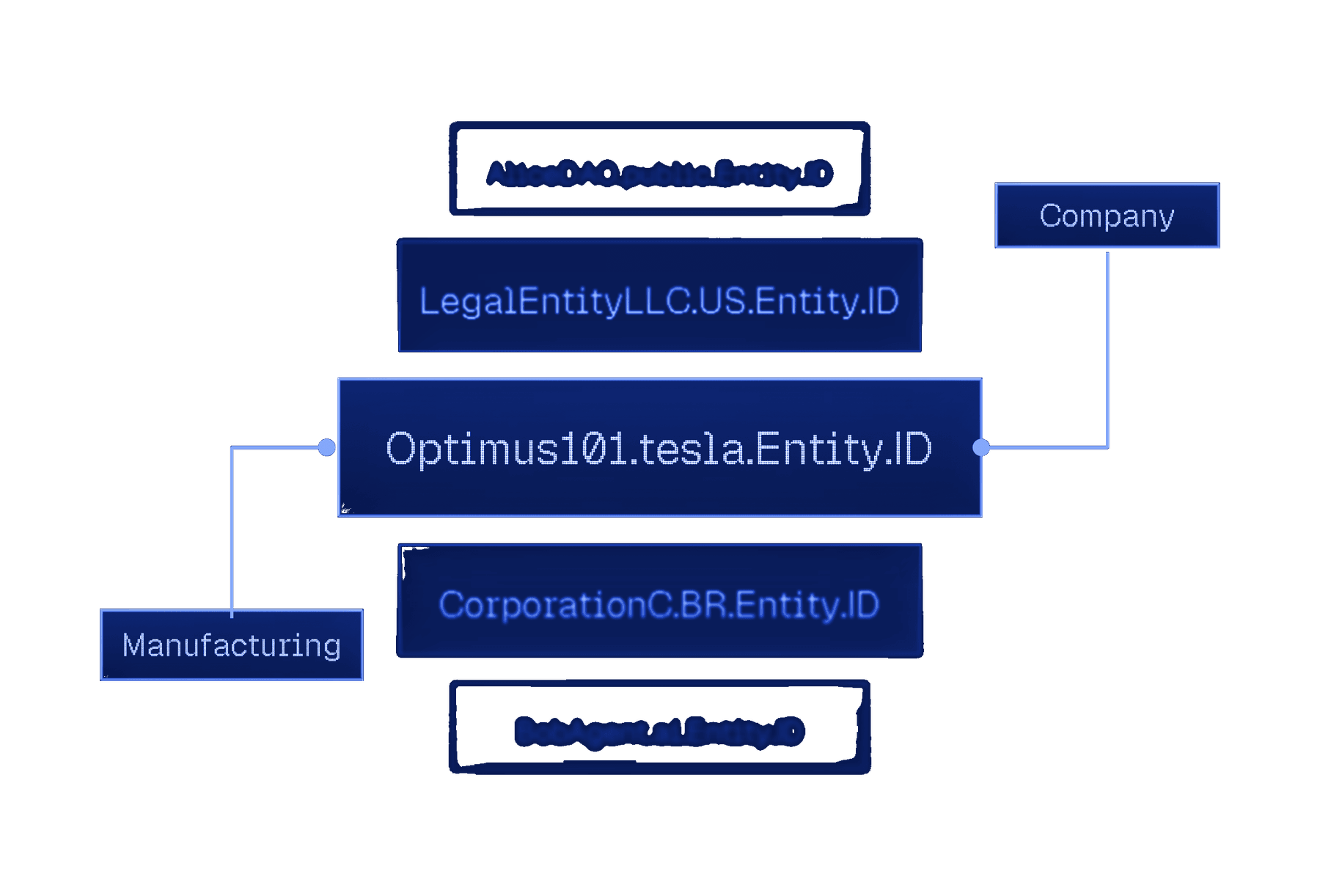
Web2 and Web3 read the same record.
An entity signs in to ordinary software with its Universal ID the way a person signs in with an email address. It signs for a wallet, a treasury or a contract with the same ID. One name, one record, checked the same way on both sides.
Already connected.
The record is useful because other systems read it. These are the connections live today. Each one reads the same five data points, nothing re-entered.
01
12
Integrated apps that read or write the record: treasury, signing, verification, incorporation and filing partners.
02
3
Ways to sign in with a Universal ID: email, passkey, wallet.
03
5
Data points every integration can rely on: who is who, who owns what, how it is run, parents and children, beneficial owners.
04
1
Record. The same one, whichever app is asking.
Five data points. Always current.
A Universal ID is not a login. It is a pointer to a record that other systems can read, with the parts an entity chooses to make public.
Who is who
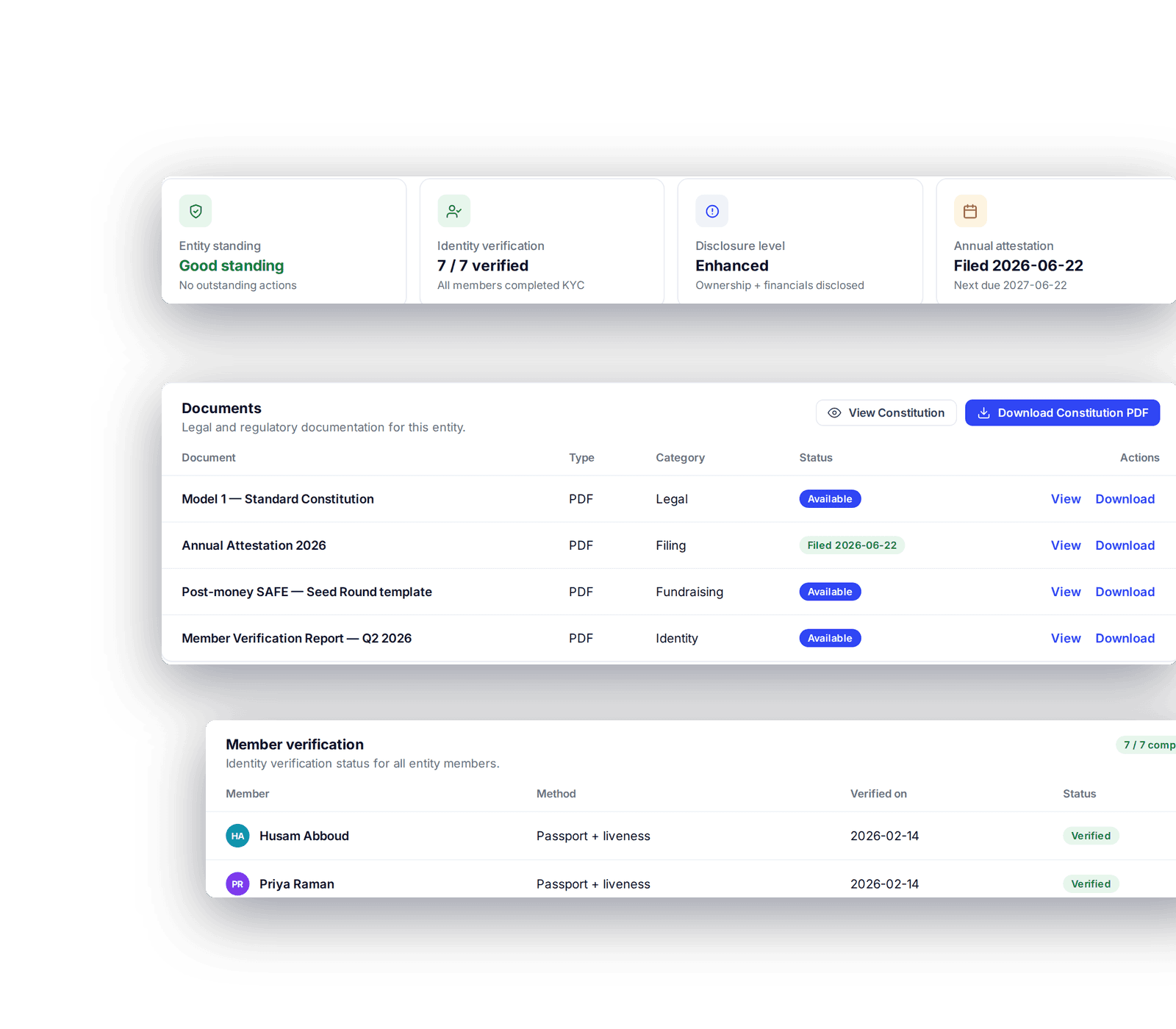
Members, managers and signers, each verified once with a government ID and a liveness check. The record shows the verified badge, never the document.
Who owns what
Shares, units or membership interests, and who holds them. Changes are recorded as they happen, not reconstructed at year end.
How it is run
The constitution in force, the roles it defines and the powers each role carries. Software reads it and the dashboard enforces it.
Parents and children
A fund holds a company, a company holds a subsidiary, a collective holds a treasury. Each link is a record pointing at a record, readable in both directions.
Beneficial owners
Follow the ownership links up until you reach people. The record answers the ultimate-beneficial-owner question that banks, registrars and counterparties ask, without a separate form.
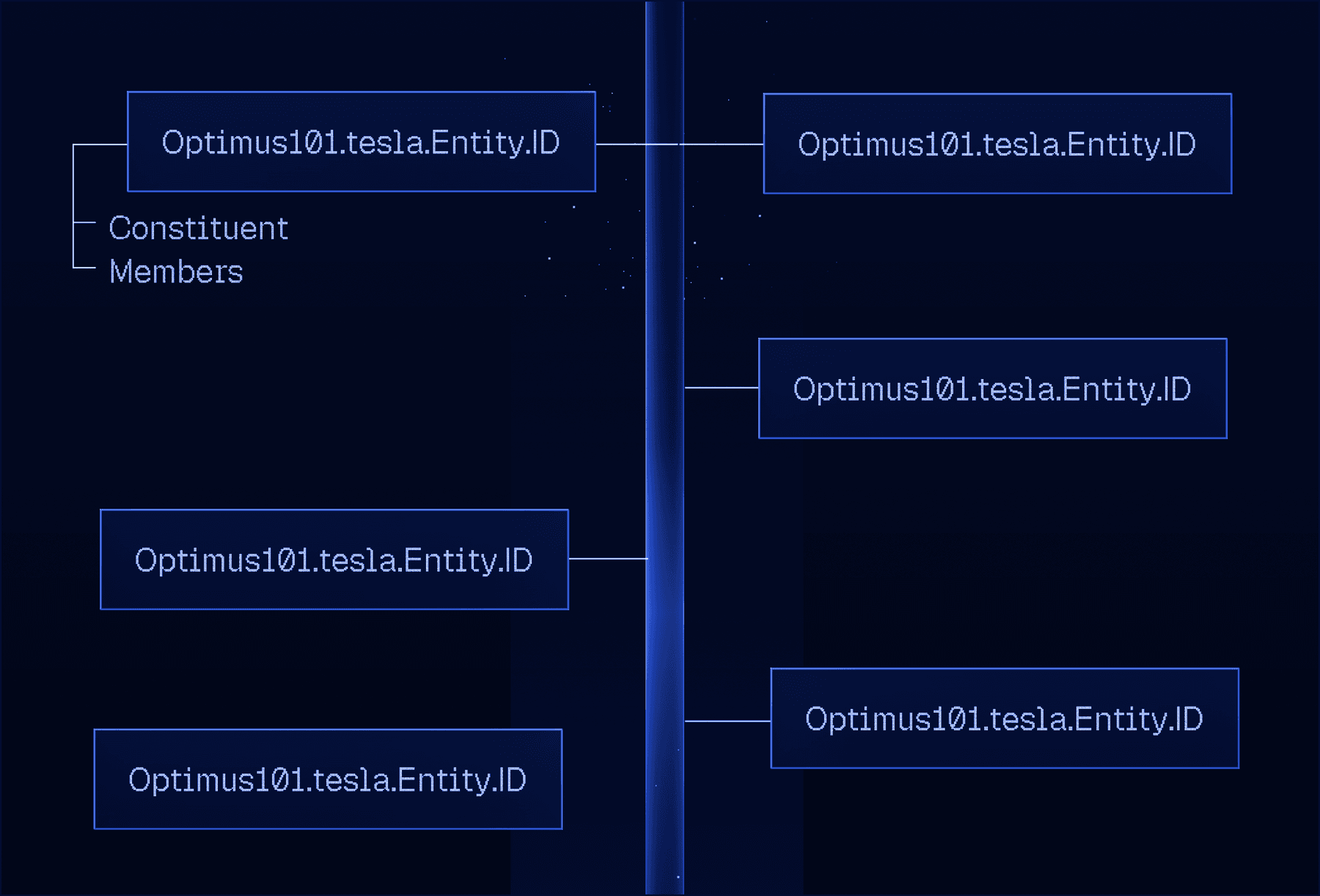
Relationships are part of the record.
An entity can be a member of another entity. A parent sees its children, a child names its parent, and a counterparty can walk the tree from any Universal ID. Ownership through layers stays readable, which is what makes the beneficial-owner answer possible.
What a counterparty sees.
The public page of a Universal ID shows the five data points the entity has chosen to disclose, each with its verification status. A bank opening an account, a platform onboarding a vendor and an investor checking a cap table all read the same page.
Give your entity one ID.
Form it, verify the people behind it, and carry the record into every app you use.