

Regulators and registrars

Every jurisdiction has a company registry. The internet doesn't.
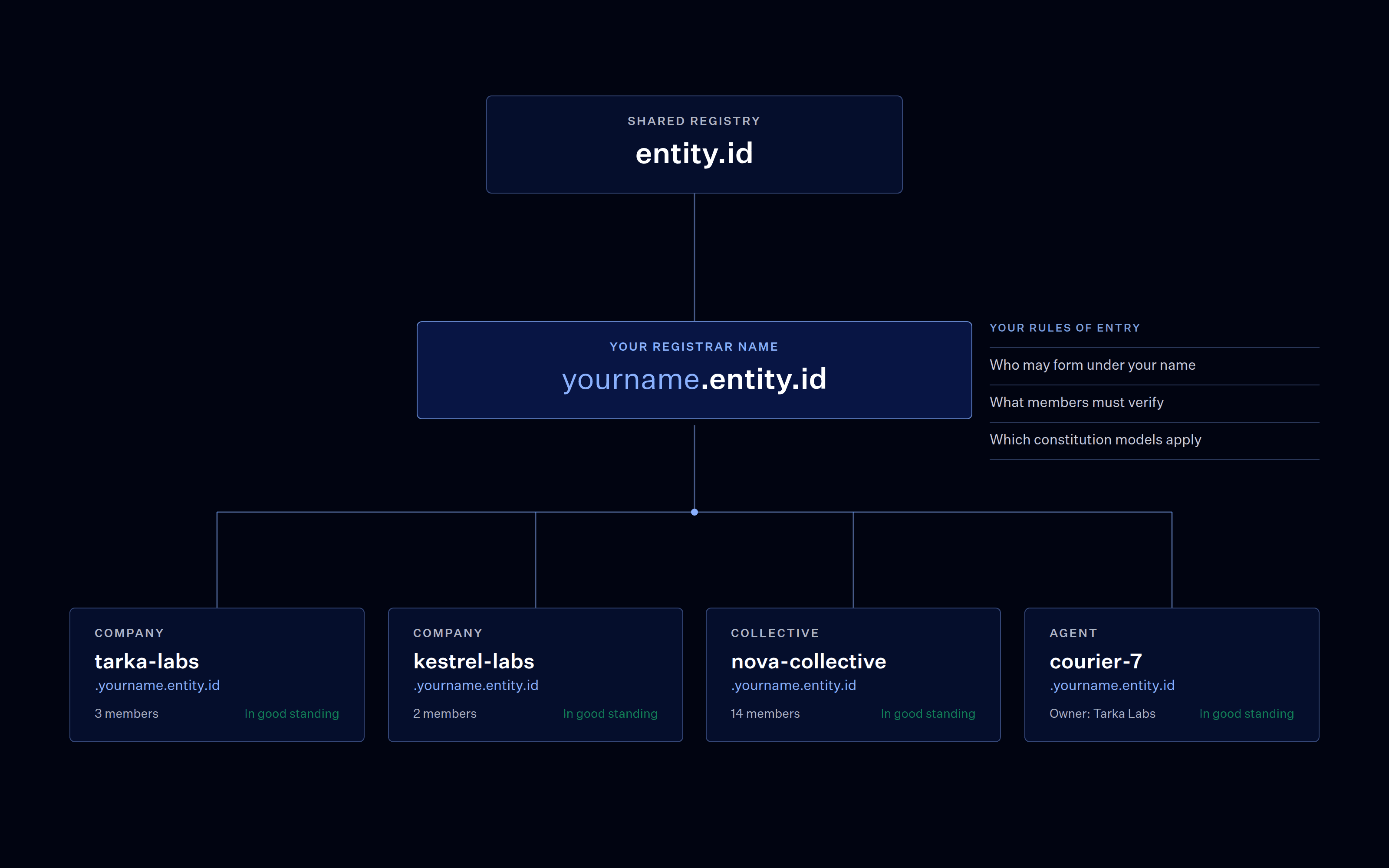
Entity.ID is that registry, and it is built to be run by registrars. You bring the rules of entry. The shared registry brings the record format, the verification and the public page anyone can check.
Issue under your own name
Companies, collectives, networks and AI agents, issued under your name with the Registrar SDK: tarka-labs.yourname.entity.id. Your rules for who may form and what they must verify. The shared registry for everything else.
The registrar name is part of every address. Anyone who looks an entity up sees who admitted it and what it had to prove.
See changes as they happen
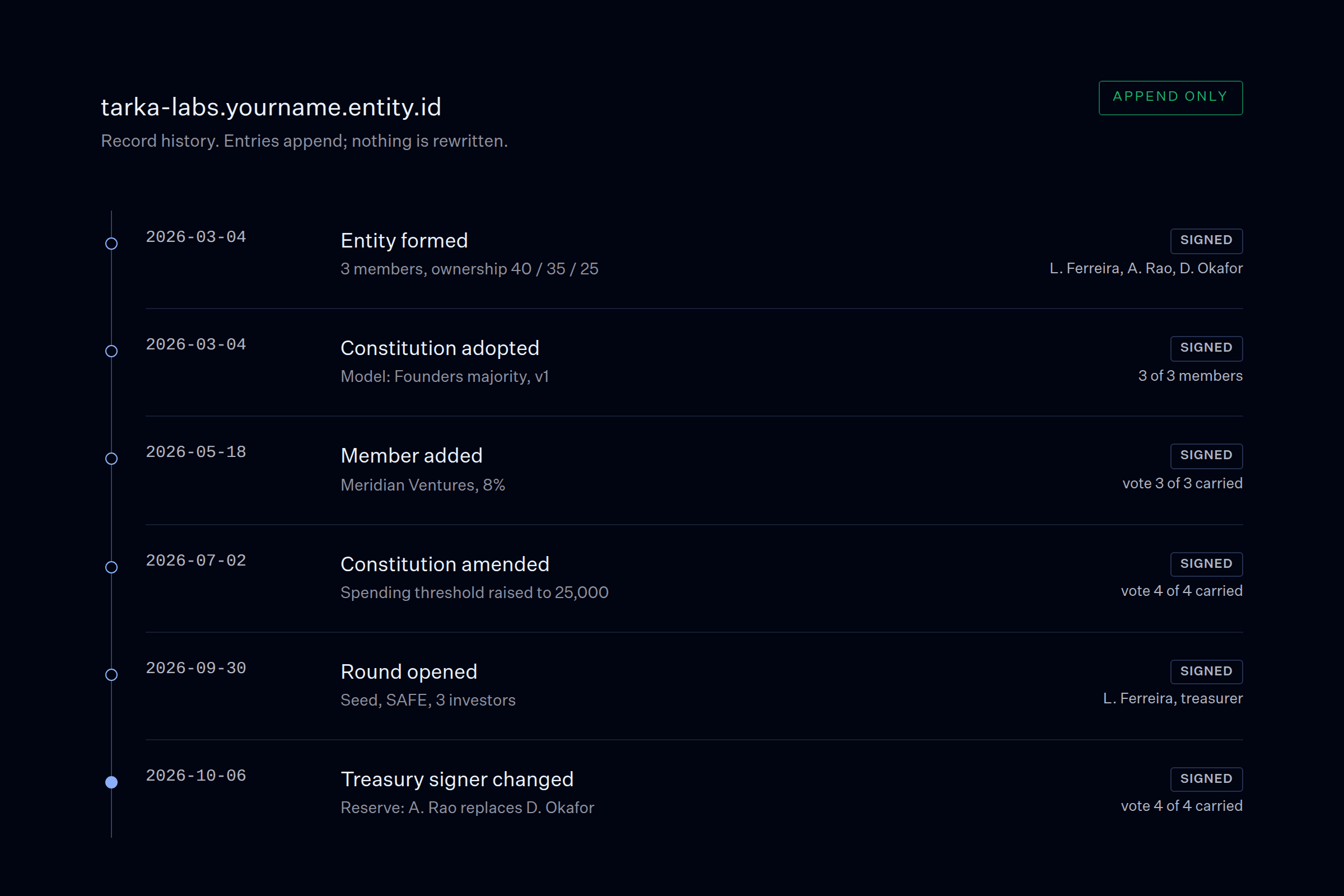
An entity adds a member, amends its constitution or opens a round, and the record shows it the same day. Every change is signed and dated. Nothing is quietly rewritten, so the record is the audit trail.
Read it on the Directory, or let your systems read it through the Verify API.
Amendments, signed and dated
Formation, each new member, each amendment and each round append to the record with the signatures that carried them. The history is the filing. There is no annual snapshot to reconcile.
Standing is computed, not declared
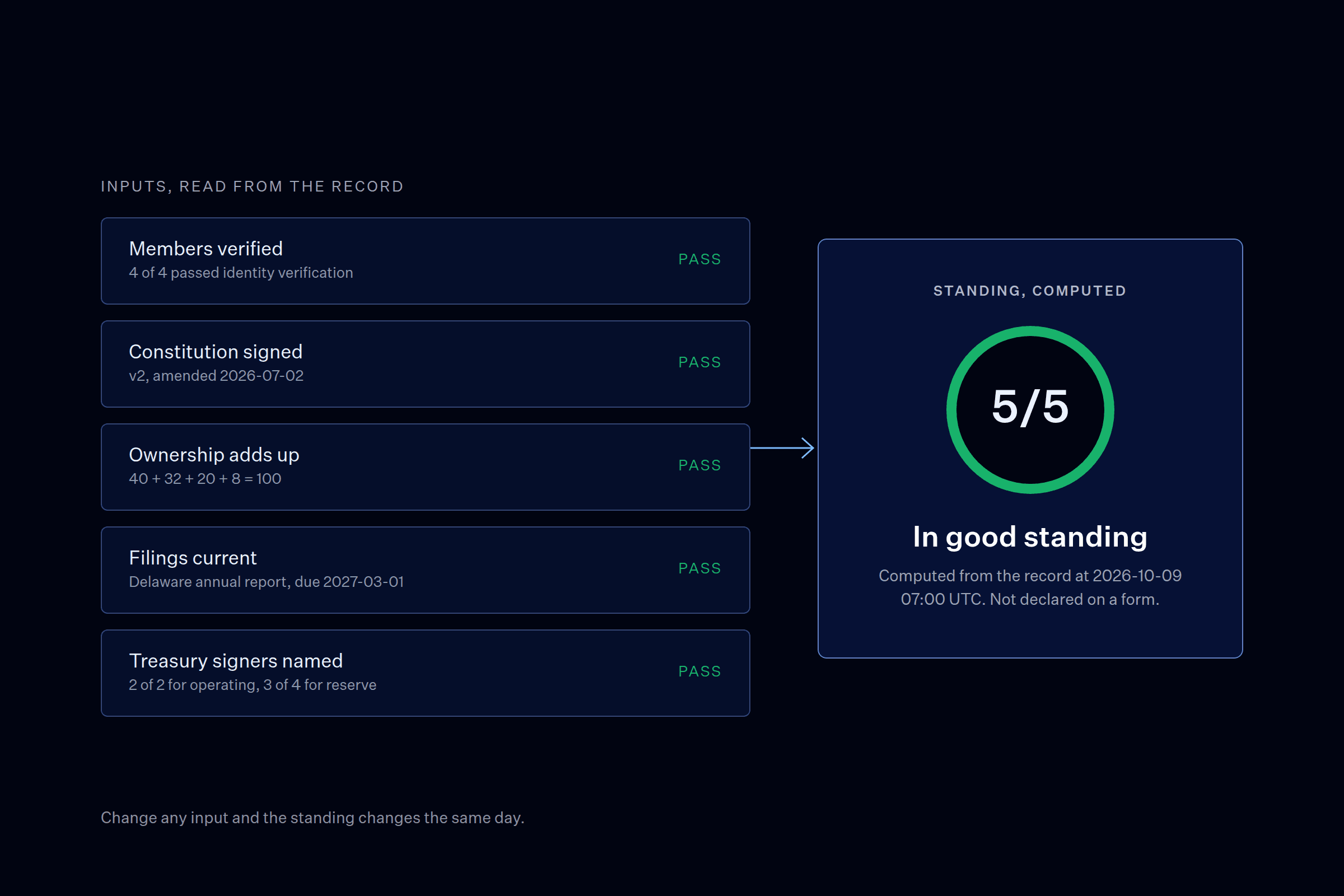
Members verified, constitution signed, ownership adding up, filings current, treasury signers named. Good standing is the result of those inputs, read from the record. Change an input and the standing changes.
One structure for every kind of entity
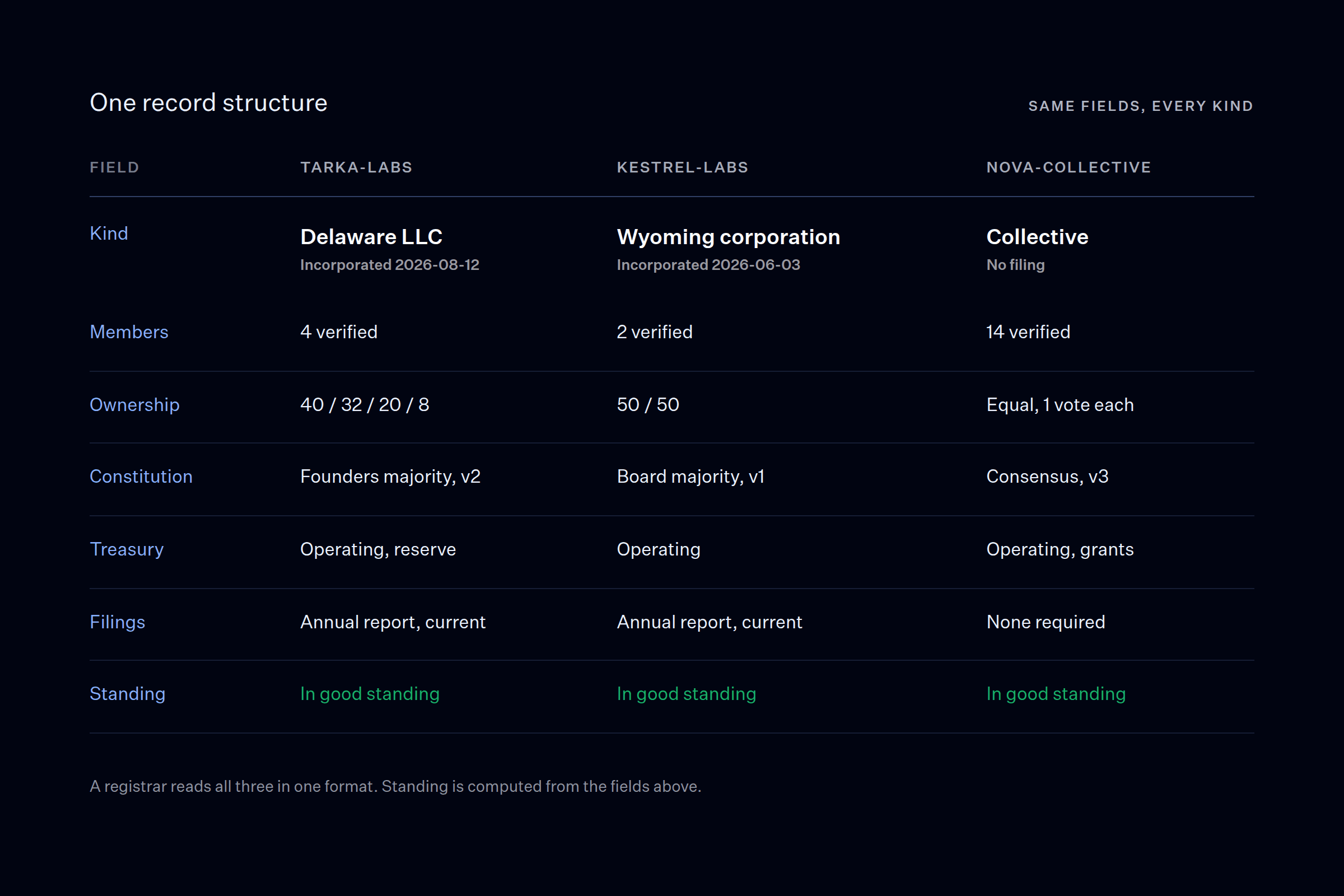
A Delaware company, a Wyoming company and a collective with no filing share the same fields: members, ownership, constitution, treasury, filings, standing. A registrar reads all three in one format.
An institution, not an app.
A Delaware company, a Wyoming company and a collective with no filing share one record structure. Standing is computed from the record, not declared on a form. That is what lets a registrar read 311 jurisdictions in one format.
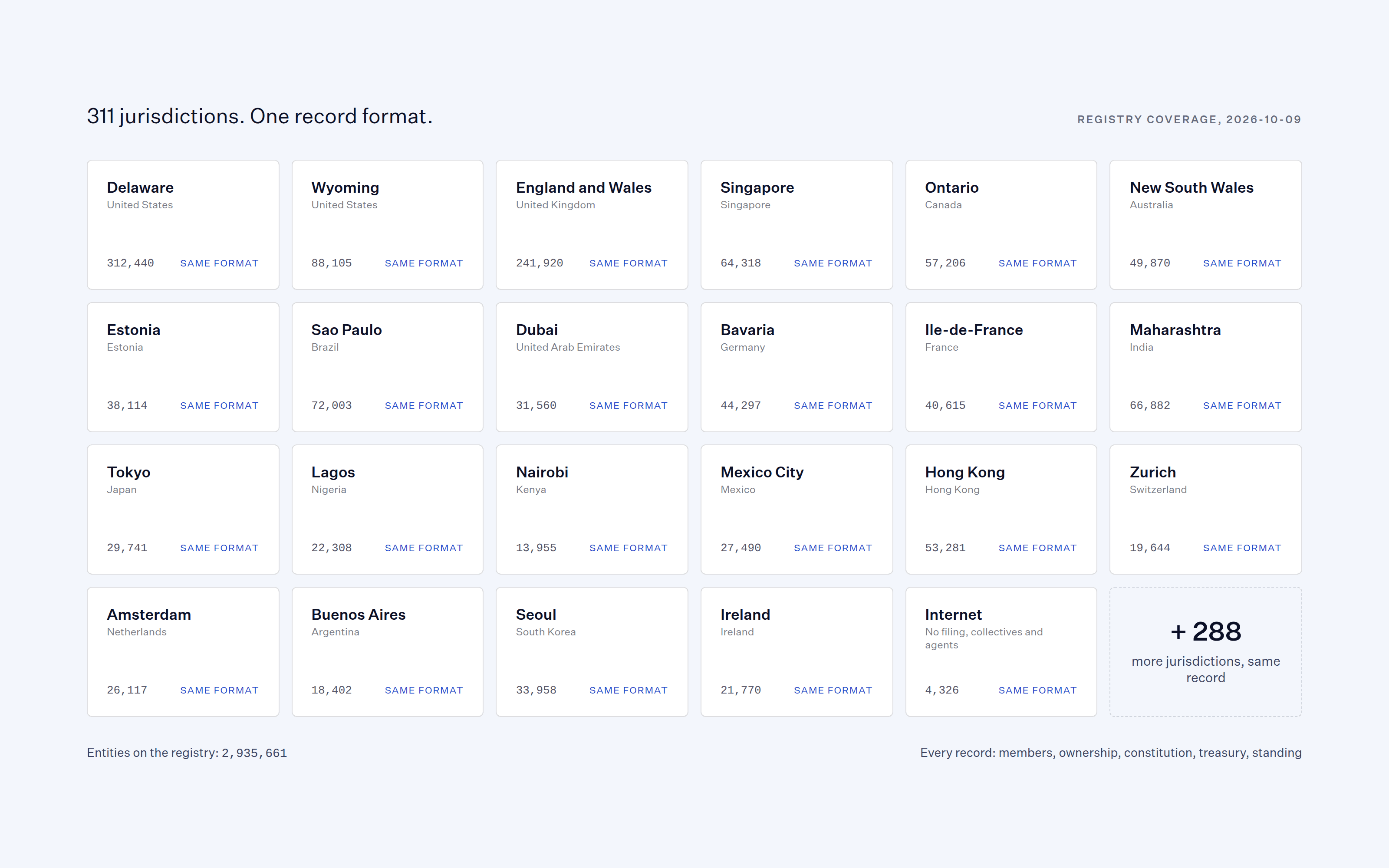
What a registrar brings. What the registry brings.
You set the terms of entry and put your name on the record. The format, the verification and the public page are shared.
01
Your rules of entry
Who may form under your name, what members must verify and which constitution models they may choose. Standing under your name means those checks passed.
02
Your name on every record
Every entity you issue carries your registrar name in its address. The Registrar SDK issues and reads records from your own tools.
03
The shared registry format
Members, ownership, constitution, treasury and standing, in the same fields for every entity. Your records are readable beside every other registrar's, by people on the Directory and by software through the Verify API.
Run your registry on Entity.ID.
The Registrar SDK is in private preview. Tell us which entities you register and we will set up your registrar name.