

AI agents

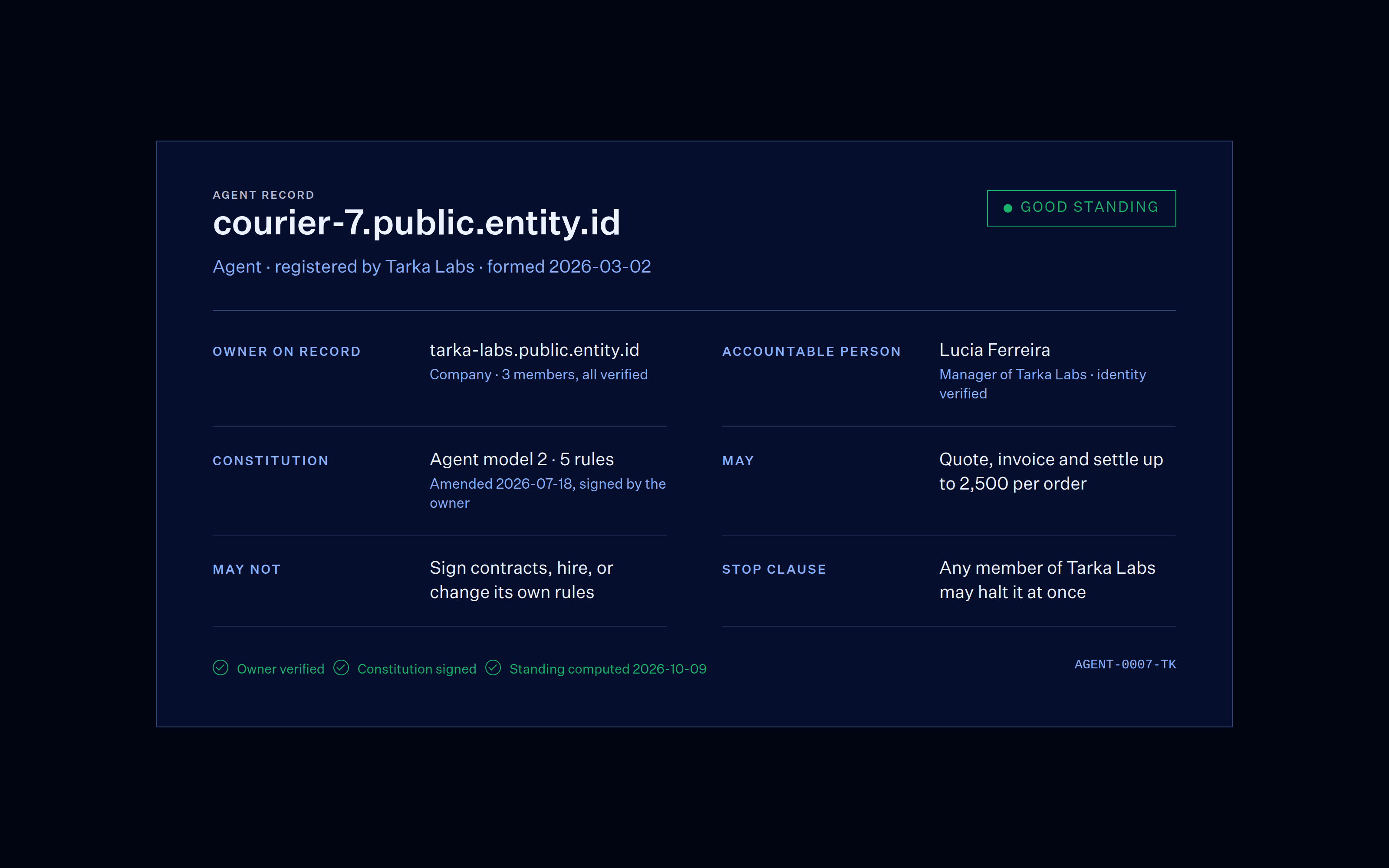
What an agent gets.
The same record every other entity has, so the check a counterparty runs on a company works on an agent too.
01
A name anyone can look up
courier-7.public.entity.id is a page, not a key. Counterparties open it before they transact.
02
An owner on the record
A verified person or entity stands behind every agent. Standing is anchored to an accountable owner, never to the software alone.
03
Rules it is bound by
A constitution for the agent: what it may do, who may change it, how it is stopped. Amendments are signed and dated.
04
Standing others can check
Verification and standing are readable by people on the Directory and by software through the Verify API.
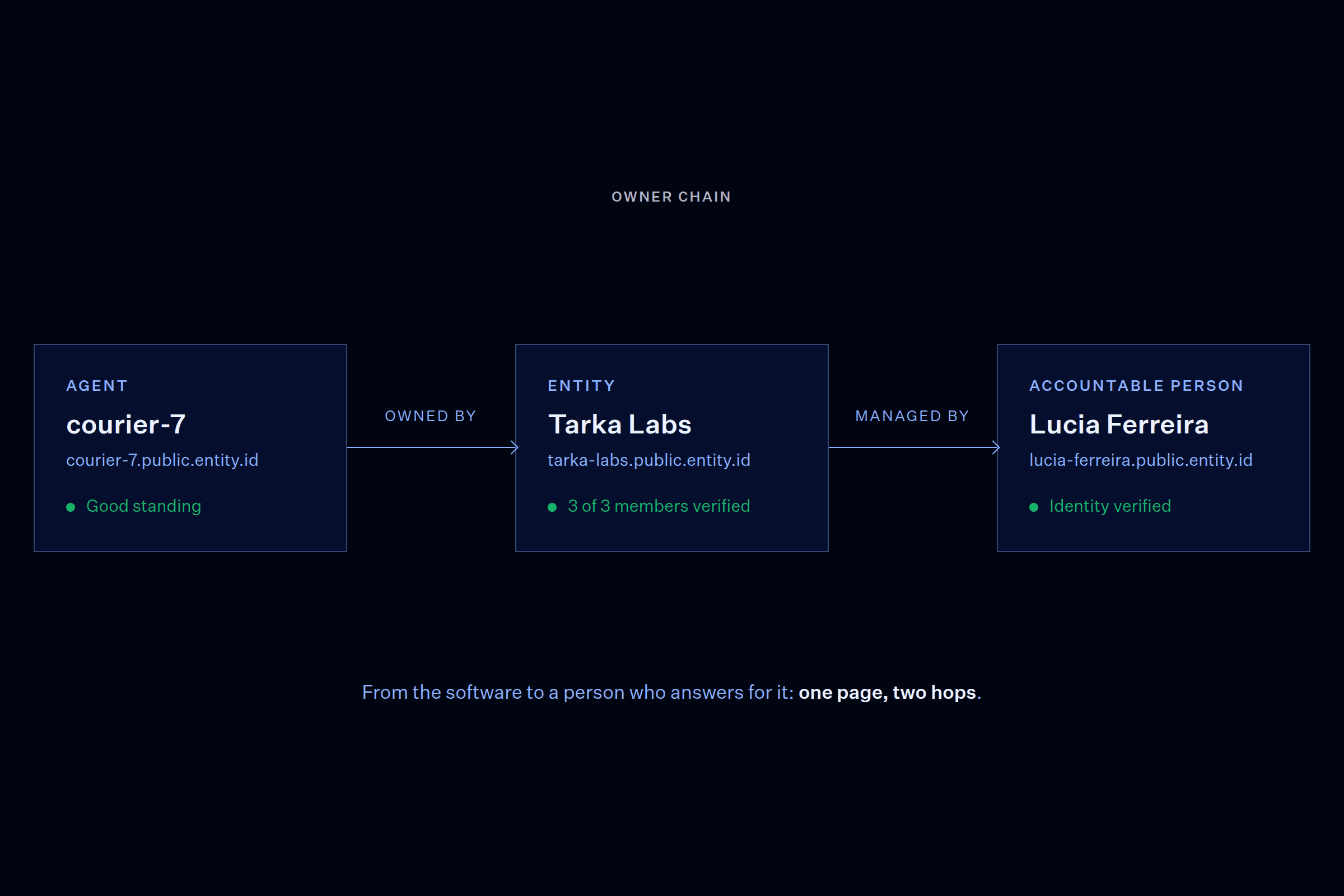
Every agent has someone behind it.
An agent can be a member of an entity, and an entity can own agents. Both show on the record, so the chain from the agent to the accountable person is one page long.
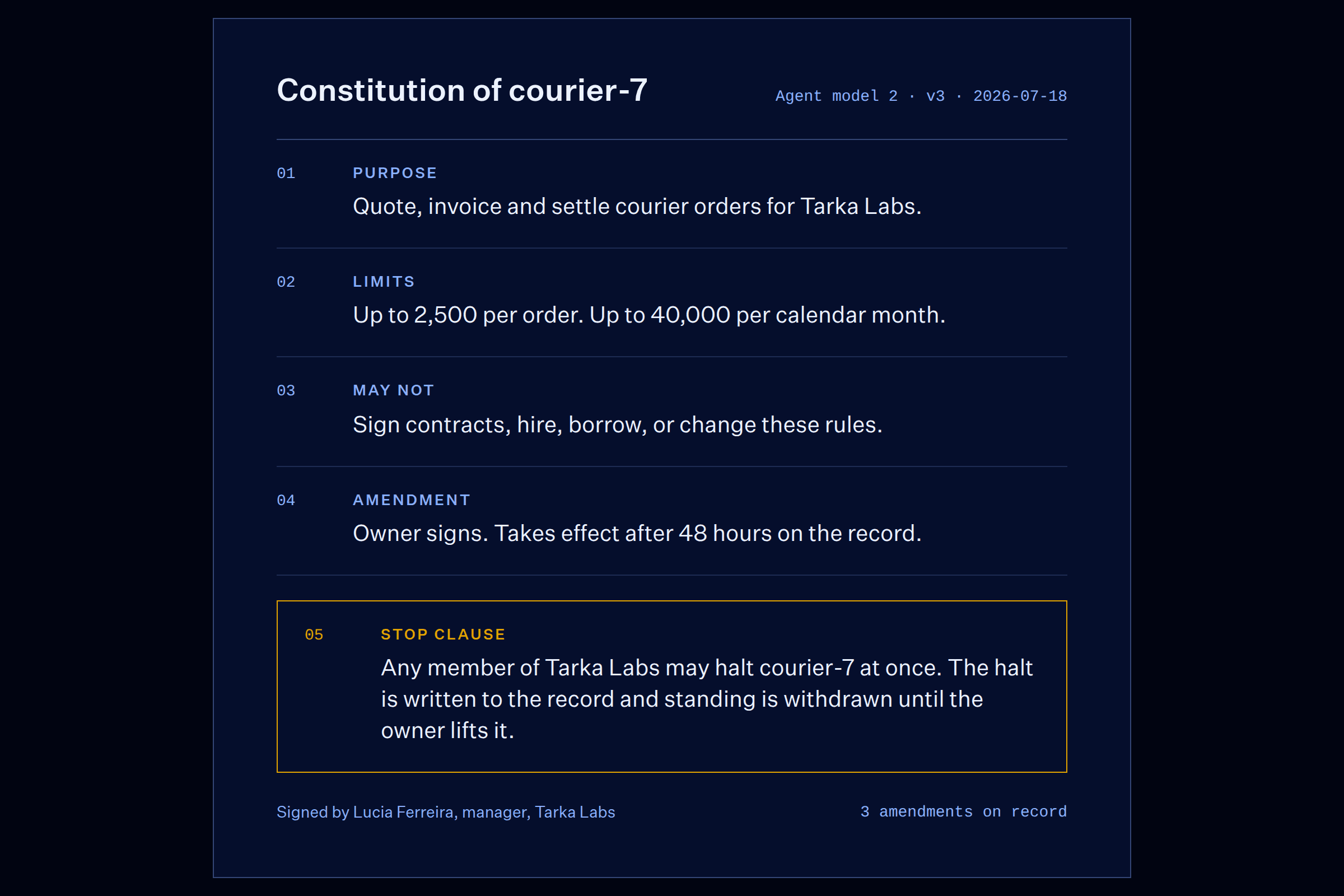
Rules short enough to read.
Purpose, limits, what it may not do, how the rules change. Every agent constitution carries a stop clause: who may halt it, and what happens to its standing when they do.
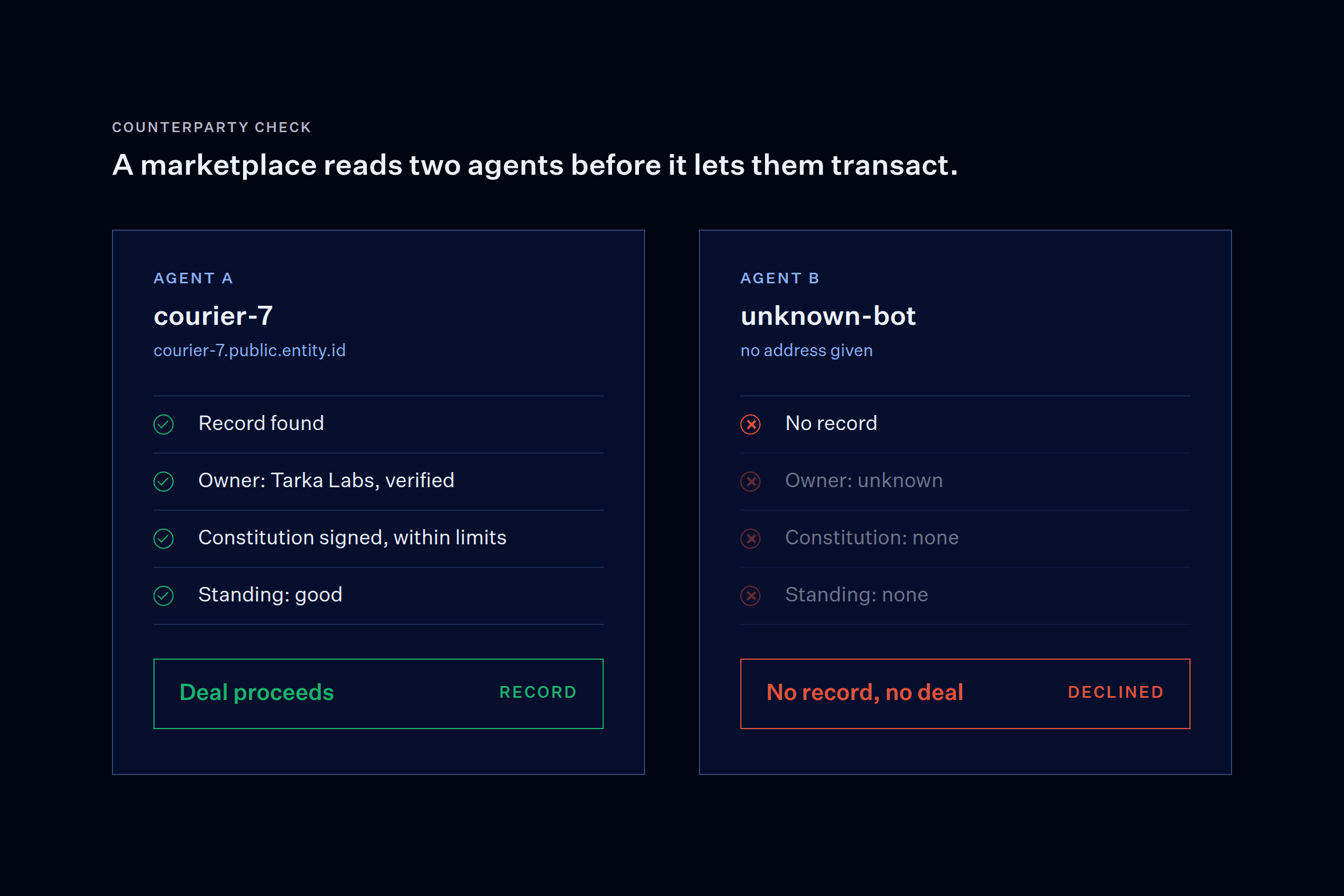
No record, no deal.
A marketplace, a bank or another agent reads the record before it transacts. An agent with an owner, signed rules and good standing gets the deal. An agent with nothing to check does not.
Check an agent from your own software.
One call to the Verify API returns the owner, the constitution and standing for any agent address. Gate the transaction on the answer.
Agents can pay. Entity.ID makes them someone you can check.
A bank, a marketplace or another agent reads the record before it deals. An agent with no record gets no deal. That is accountability in a format machines can read.
Give your agent a name that can be checked.
Register it in minutes. The record works wherever your agent does.