

Constitution

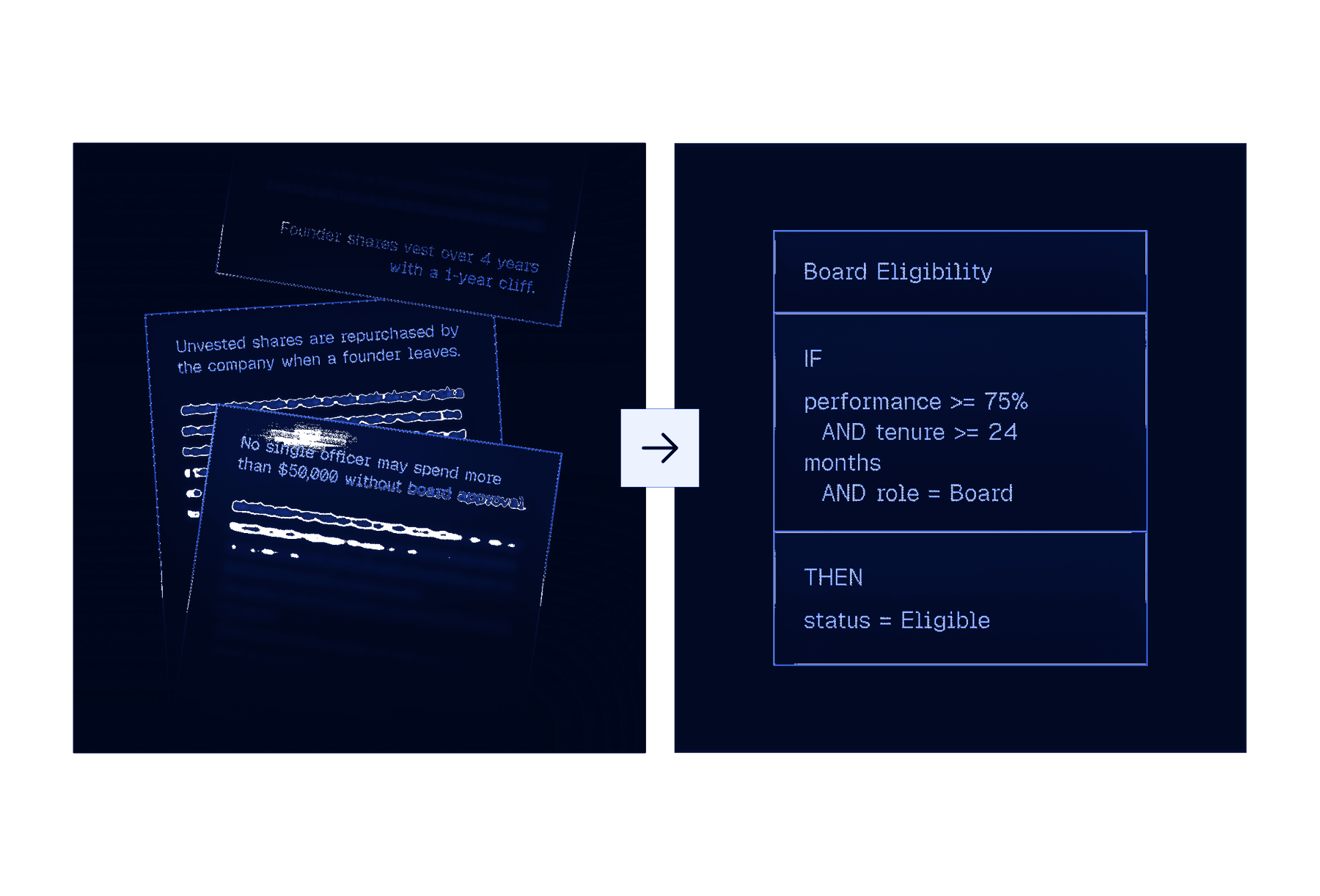
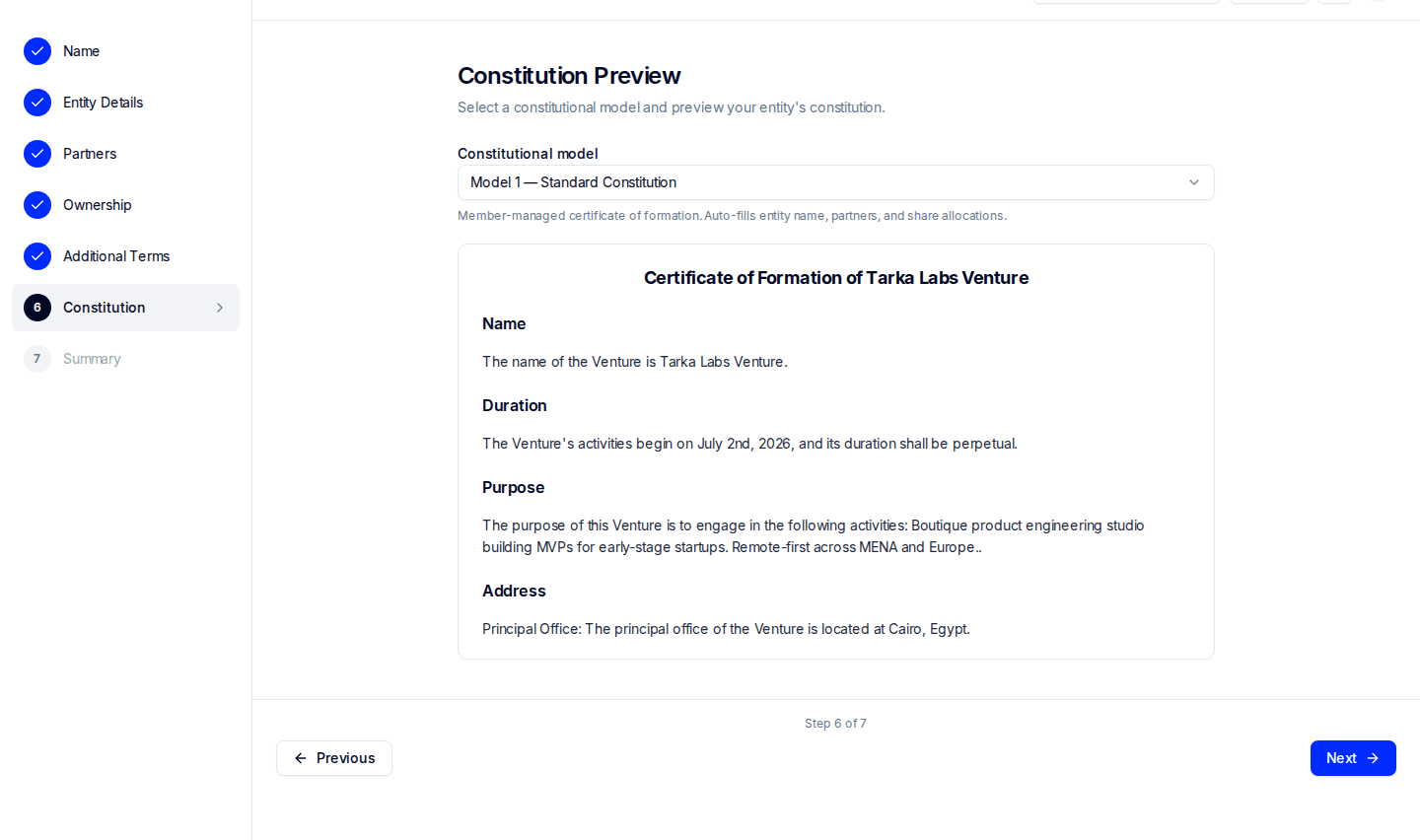
Start from a model, not a blank page.
The model library at models.entity.id holds complete, readable constitutions: a standard model for most companies and a minimal one for teams that want to add clauses themselves. Adopt one as it is, or swap the clauses that matter to you. Each clause has a name you can cite.
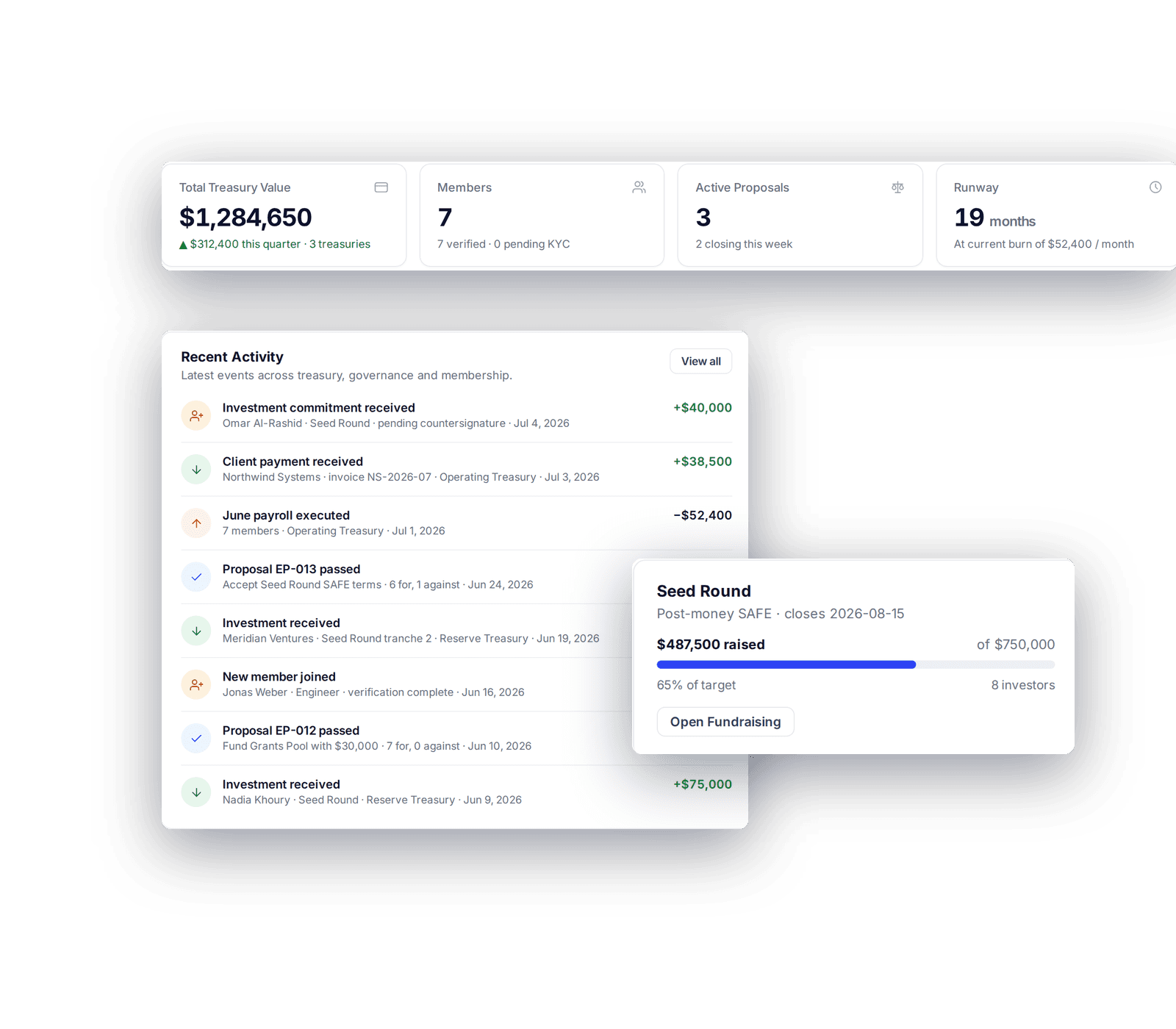
The dashboard holds you to it.
The ownership split from formation is part of the constitution. The voting threshold decides when a proposal passes. The signer list decides who may move money. None of it is enforced by hand, because the dashboard reads the same text your members do.
Three parts, one document.
A constitution on Entity.ID is built from models, clauses and amendments. Every version stays on the record, so anyone can read what applied on a given date.
Models
Complete constitutions you can adopt in one step. Standard for most companies, minimal when you want to write the rest yourself.
Clauses
Named rules for voting thresholds, transfer limits, manager powers and more. Add one, swap one, cite one by name.
Amendments
A change is a proposal, a vote under the current rules, then new text. The old version stays readable. Nothing is edited in place.
Rules that hold without a lawyer in the room.
Choose a model, set your terms and publish. Amend it later by vote, never by edit.