

Solopreneurs

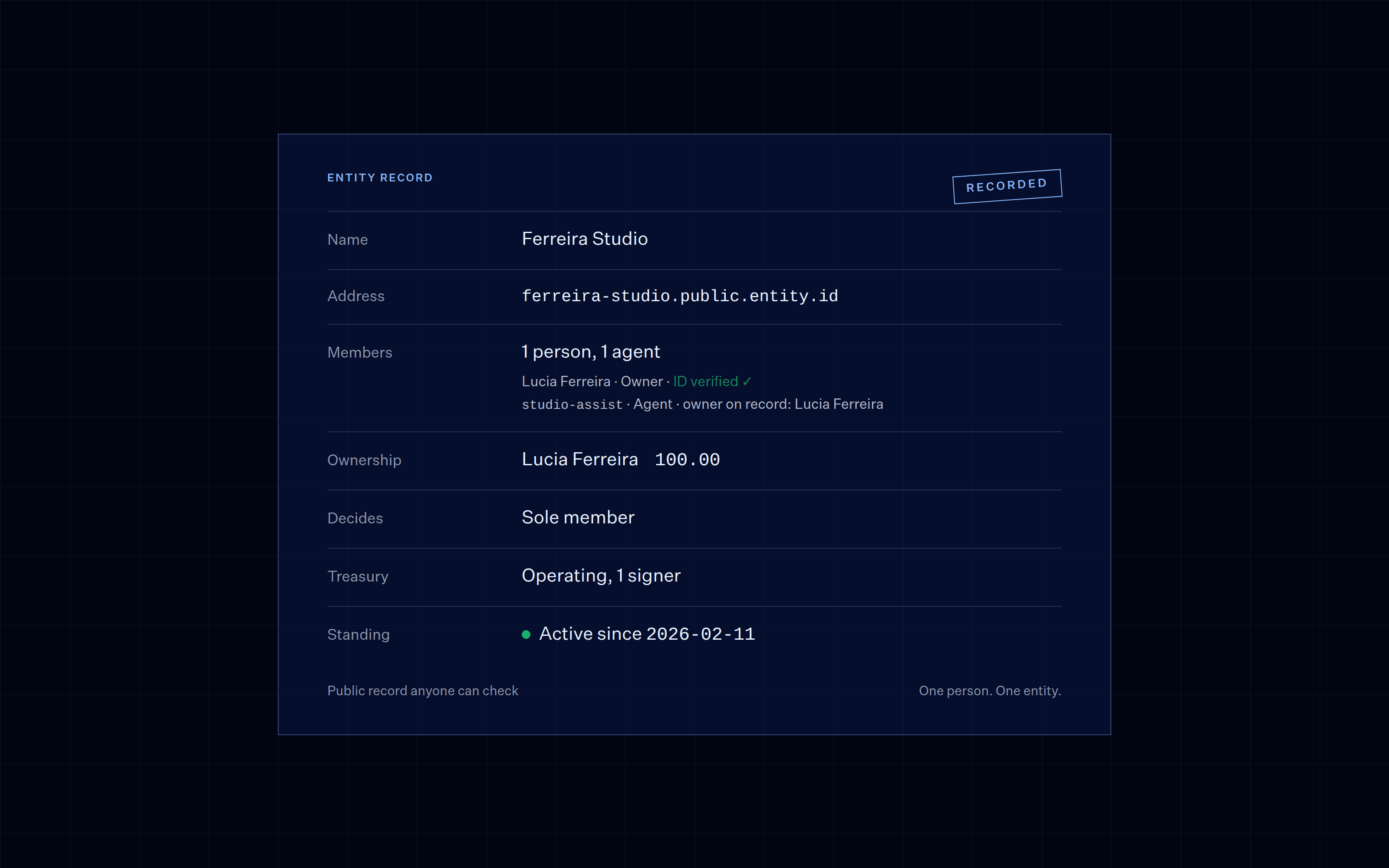
One person is still a company. The record should say so.
A freelancer, a consultant, a maker with one product. The work is real, the clients are real, and every one of them asks the same question in a different way: who am I dealing with. A public record answers it once, for everyone, without a lawyer and without a filing.


Working as yourself, or as an entity
| The same week, two ways | As yourself | As a Super Entity |
|---|---|---|
| Invoices | Your name and a bank account | The company name, with a public address a client can check |
| Money | Mixed into a personal account | An operating treasury with a named signer and a history |
| Contracts | Signed in your name | Signed by the entity, with the signer on record |
| Proof for a client | A PDF and a profile page | A public page with members, standing and decisions |
| Your assistant agent | An account under your login | An Agent ID with you as owner on record and set limits |
| A first partner | Start the paperwork from zero | Add a member and re-sign the split, history kept |
| Incorporating | New documents, retyped | One step, the record carries over |
Form it tonight
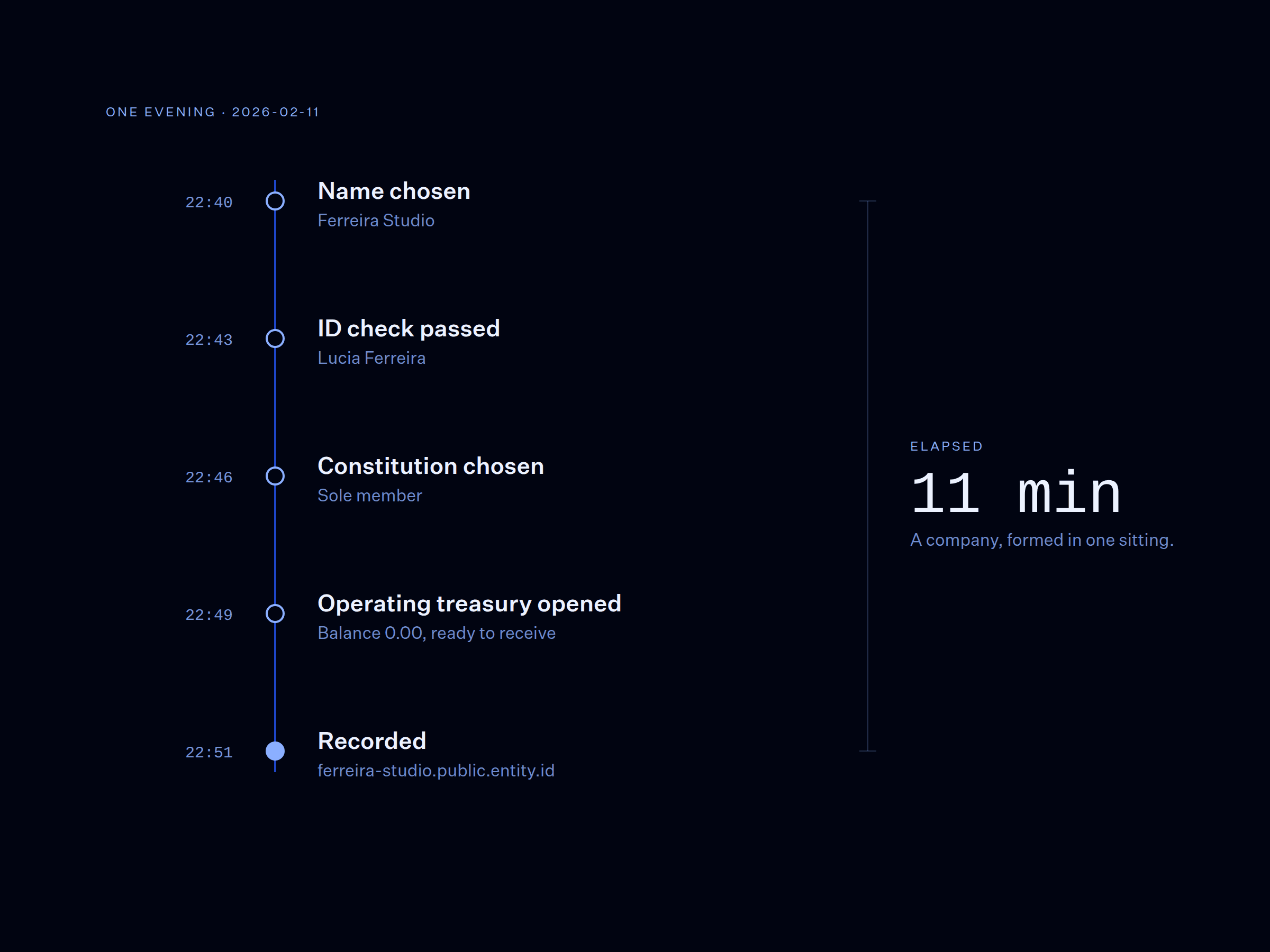
Pick a name, pass an ID check, choose the sole-member constitution and open an operating treasury. Eleven minutes, and the record exists with standing anyone can check.
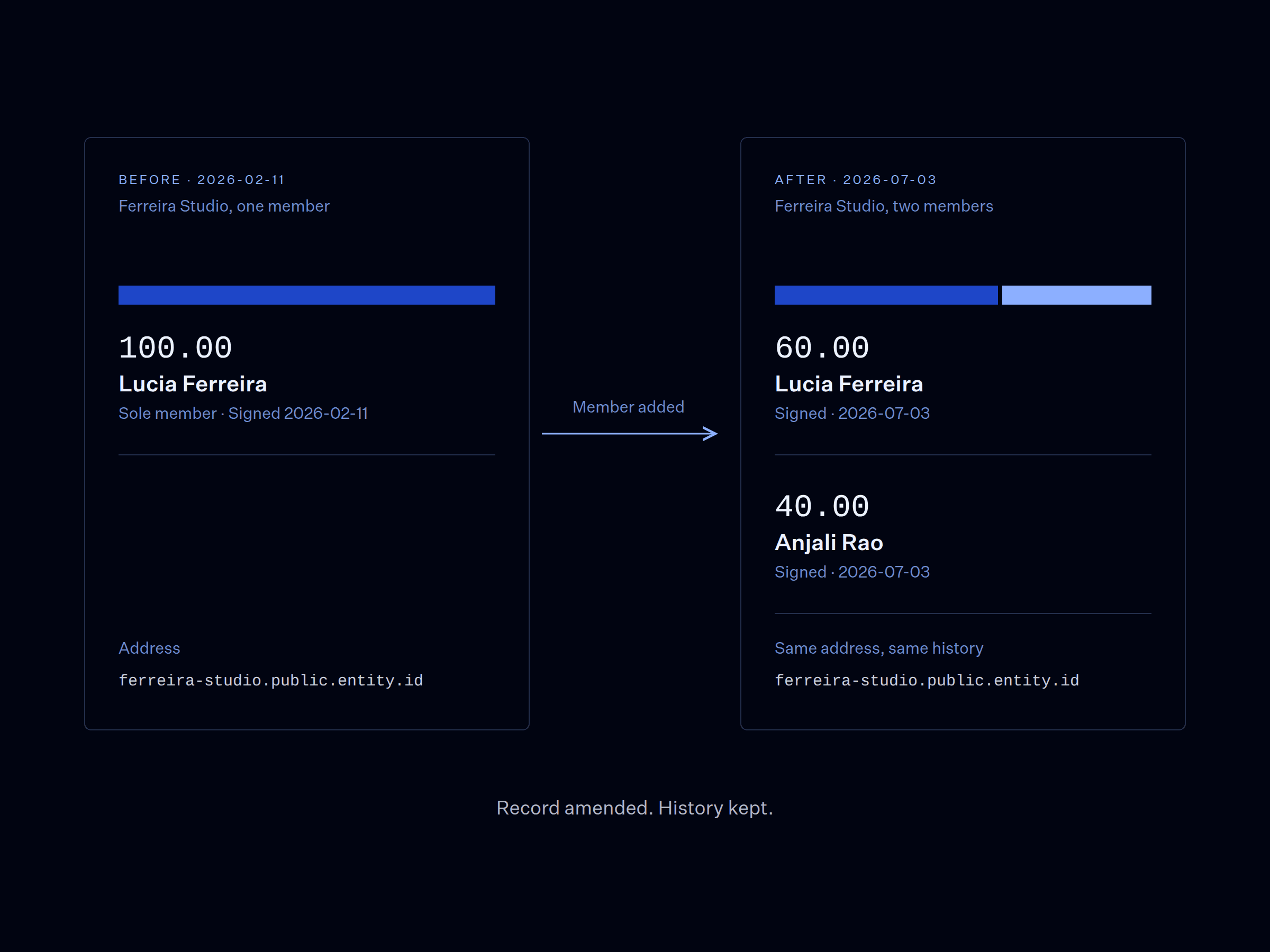
Add a partner when one arrives
Record the new split and both of you sign it. The company keeps its name, its address, its history and its clients. Nothing starts over.
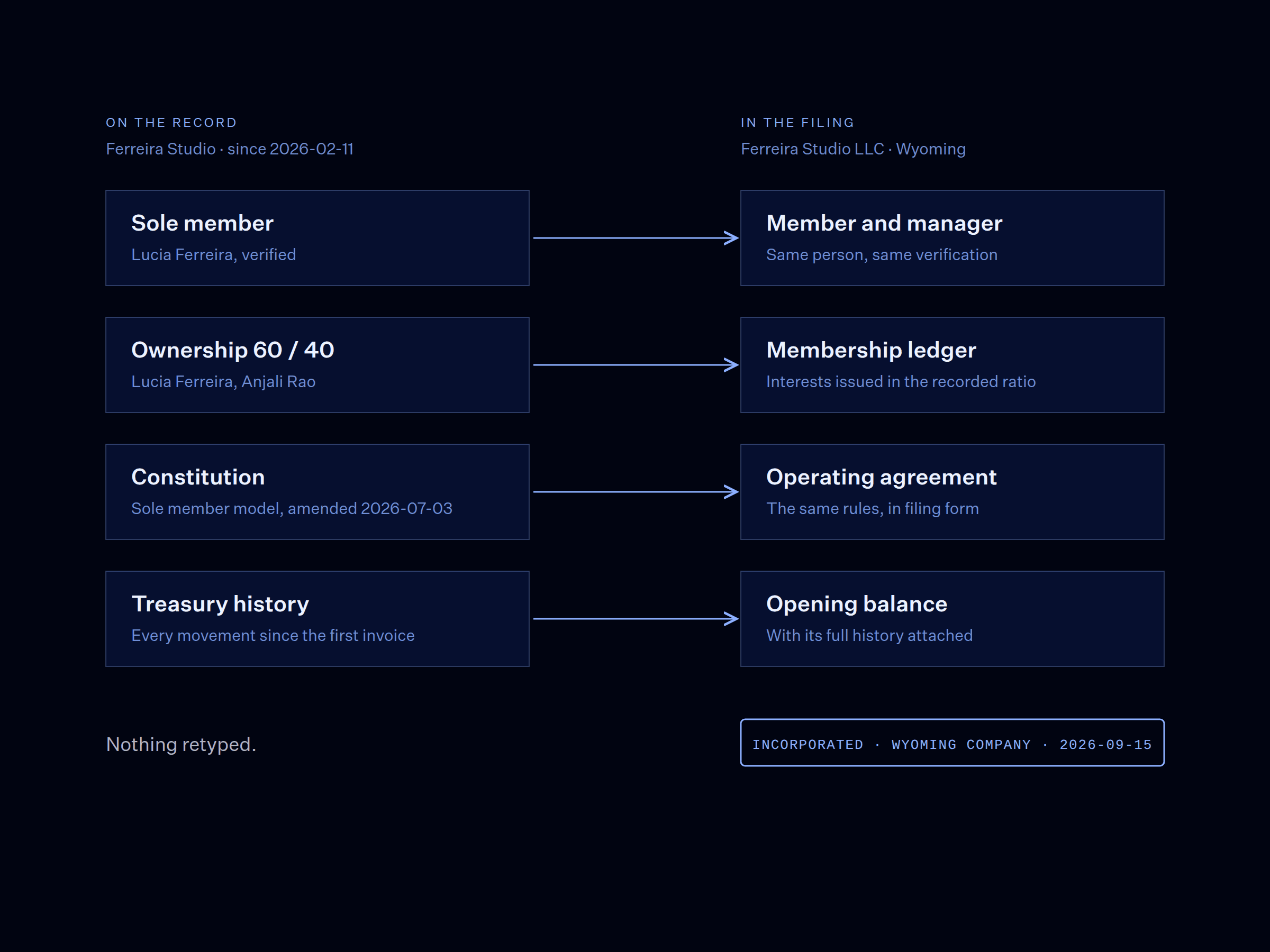
Incorporate when a client asks
Incorporate as a Wyoming company or a Delaware corporation from the dashboard. Members, ownership, constitution and treasury history carry into the filing. Incorporation is a step, not a starting point.
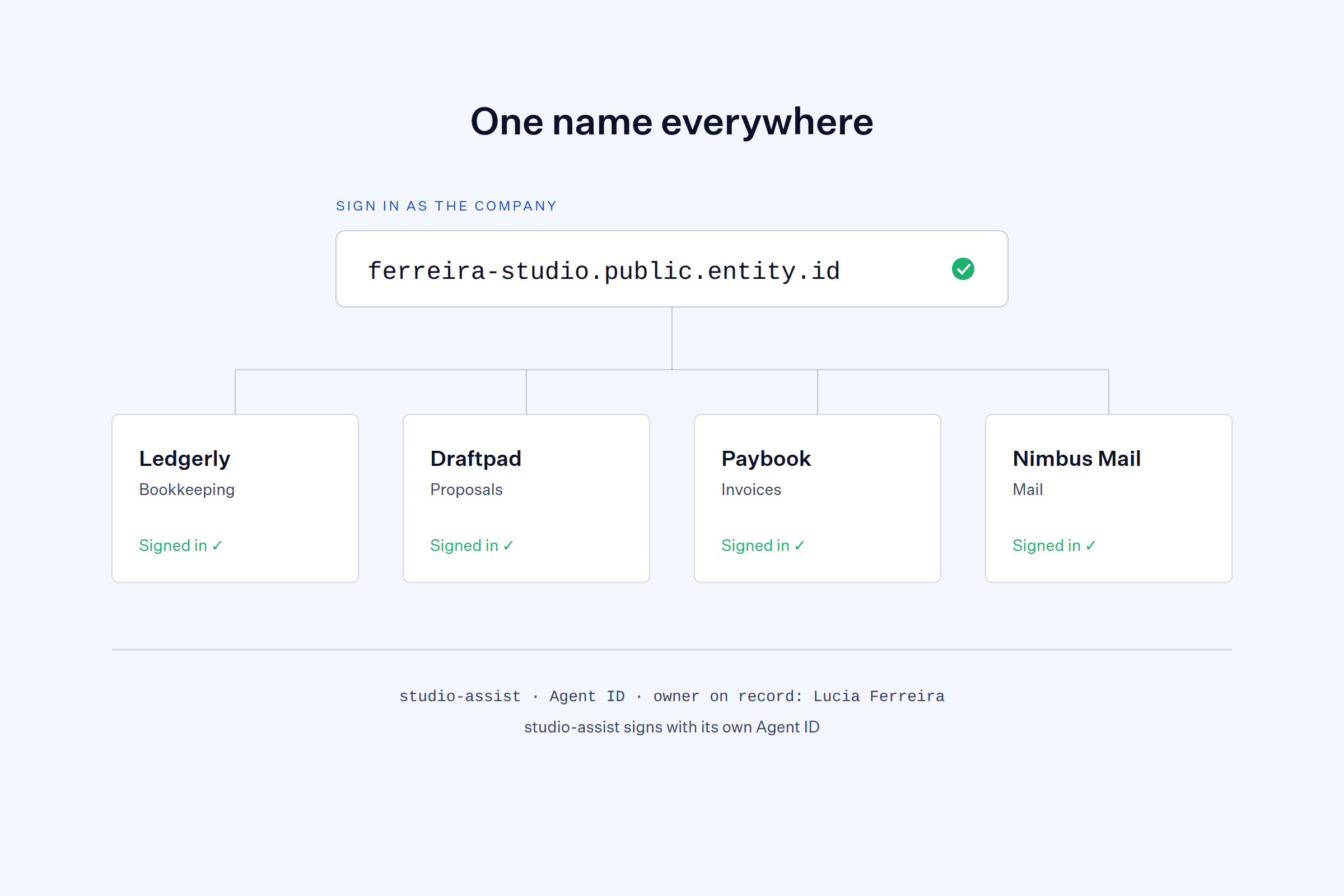
One name everywhere
Your entity carries a Universal ID. Sign in to your tools as the company, not as yourself. Your assistant agent signs in with its own Agent ID, with you as the owner on record. Every system you touch sees the same record, checked the same way.
Who reads the record
You will rarely open it yourself. The people around your business will.
01
The client
Checks the public page before the first payment and sees a company that exists, with a member who is verified and a history that is not a week old.
02
The platform
Onboards an entity with a record instead of a person with a form, and knows which agent is allowed to act for it.
03
The bank
Reads ownership, signers and decisions from one place when you ask for an account or a card.
04
The future partner
Joins a company that already has a name, a split to amend and a constitution to read, not a folder of PDFs.
One person. One record. Tonight.
Form a Super Entity in minutes. Grow it, or incorporate it, without starting over.