

Pre-formal ventures

One account for the whole company, before it is even a company.
Formation, treasury, fundraising and verified standing in one place, on one record. No scattered documents, no "we will formalize it later". A venture at an address like tarka-labs.public.entity.id.
What the venture account holds.
Four things a venture needs from day one, each on the same record.
01
Form. Register a real entity
Seven steps from a name to a registered venture: members, ownership splits that must add up, a constitution from tested models.
02
Operate. Run the treasury
Balances, payments, payroll and runway. Every movement posts to the venture's own record, not to someone's personal account.
03
Raise. Close your round
Issue SAFEs, track every investor from signed to wired, and settle funds straight into the venture treasury.
04
Verify. Prove your standing
People verify with an ID check, AI agents with an owner on record. Anyone, human or machine, can check the record before they transact.
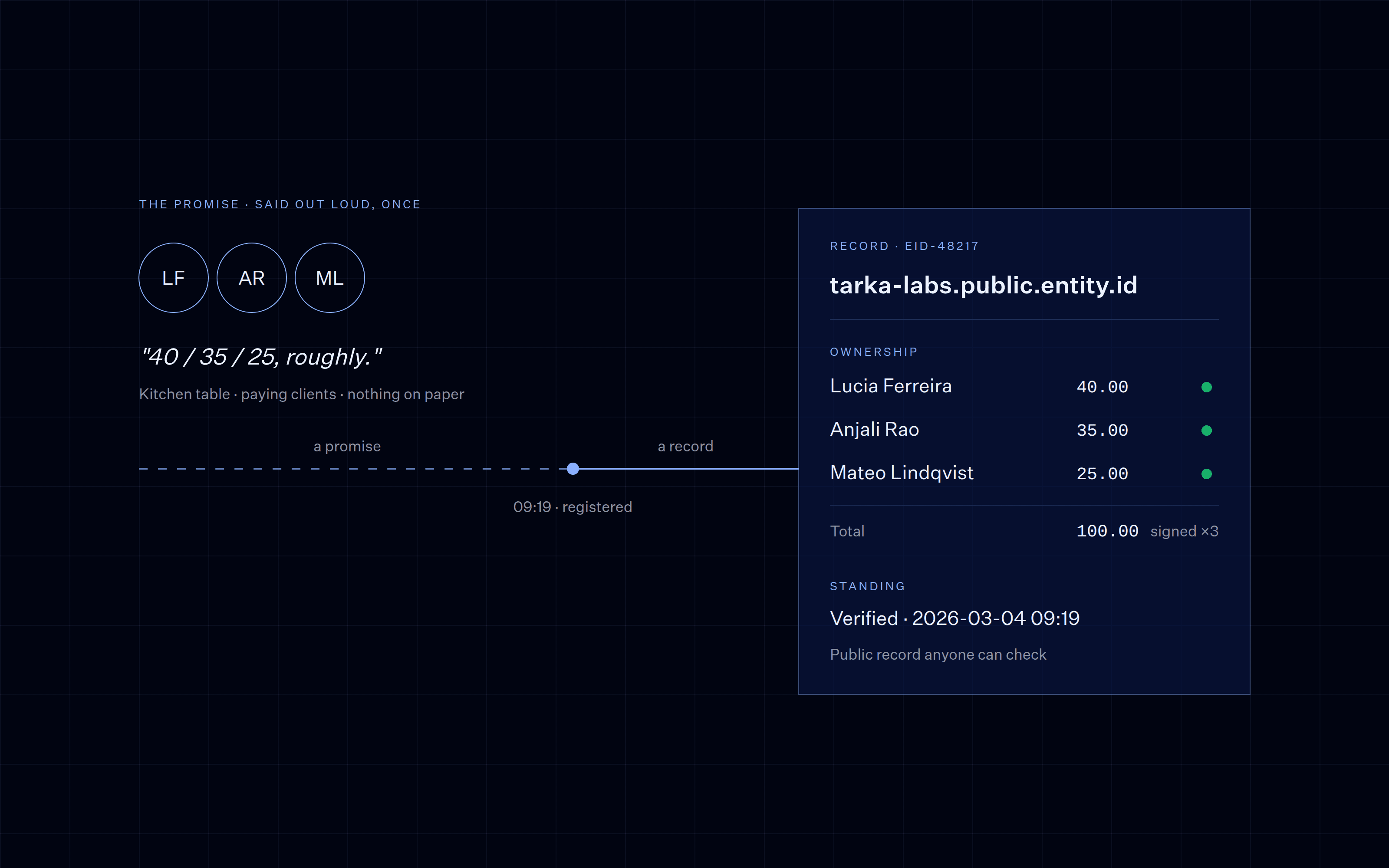
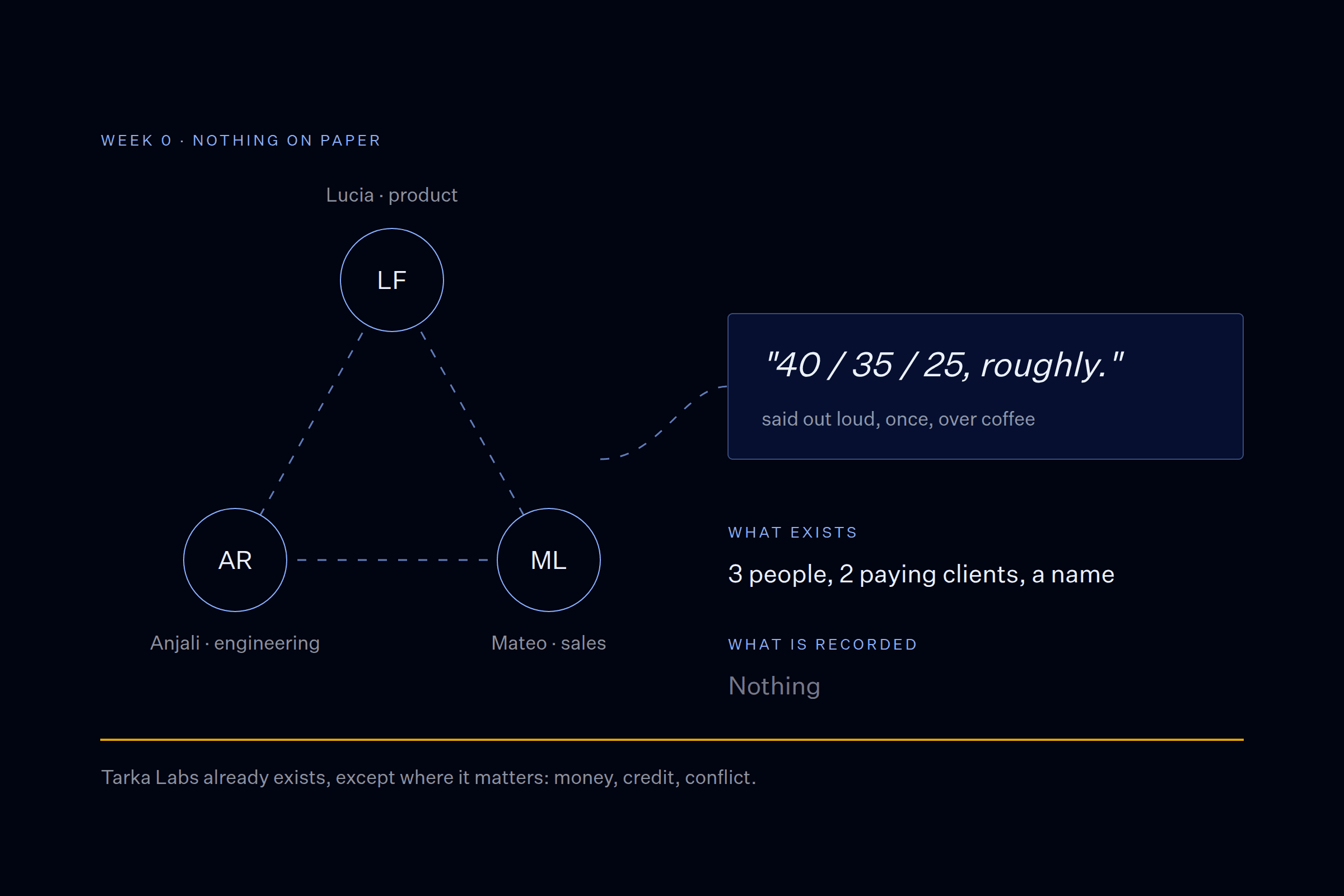
The handshake. Three people agree to build together.
A kitchen table, paying clients and nothing on paper. By every practical measure Tarka Labs already exists, except the measures that matter when money, credit or conflict shows up. Equity is "40 / 35 / 25, roughly", said out loud, once.
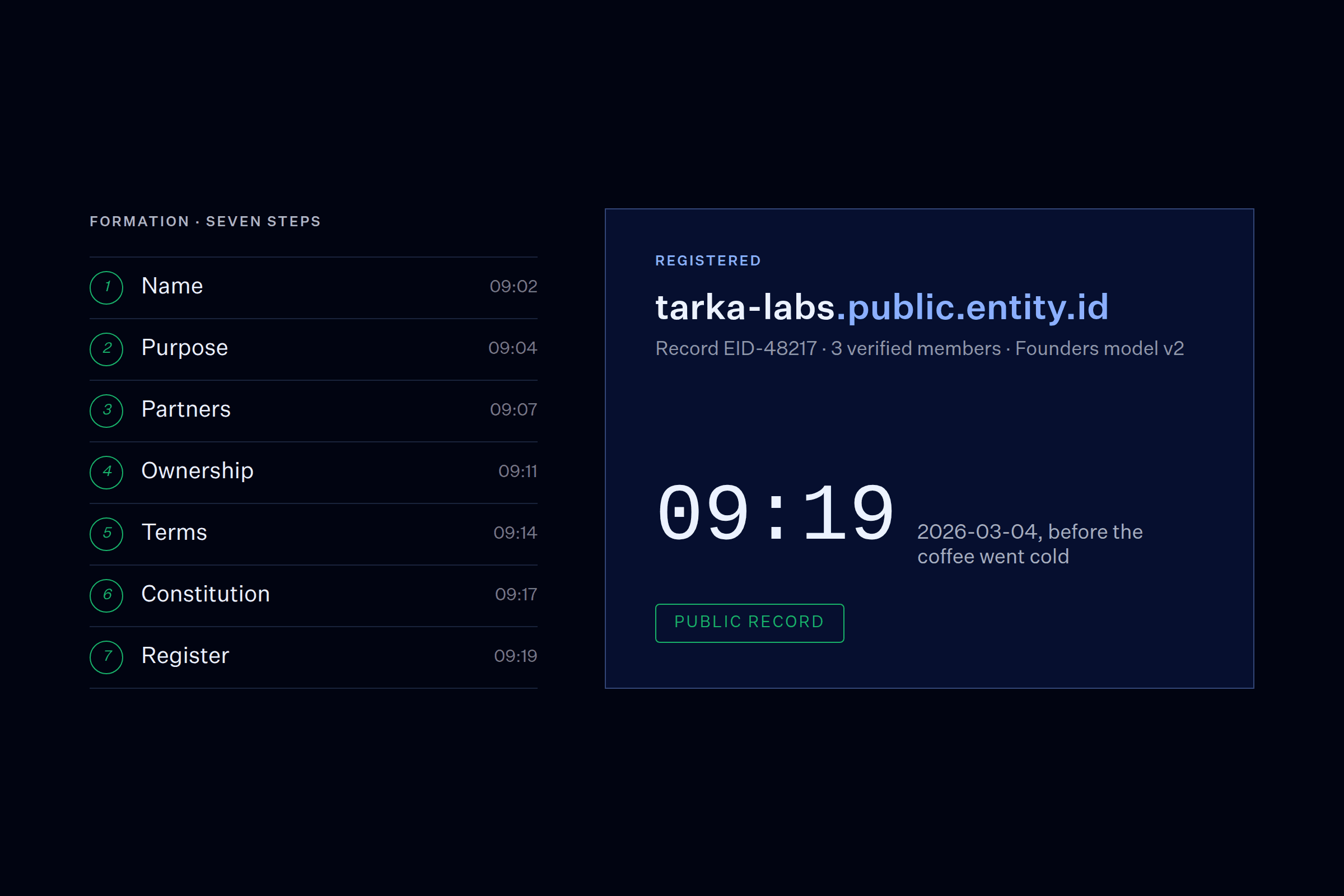
The name. Seven steps later, it is real.
Lucia opens the formation wizard with her coffee. Name, purpose, partners, ownership, terms, constitution, register. Before the coffee goes cold, Tarka Labs has verified members, written rules and a public address anyone on earth can look up.
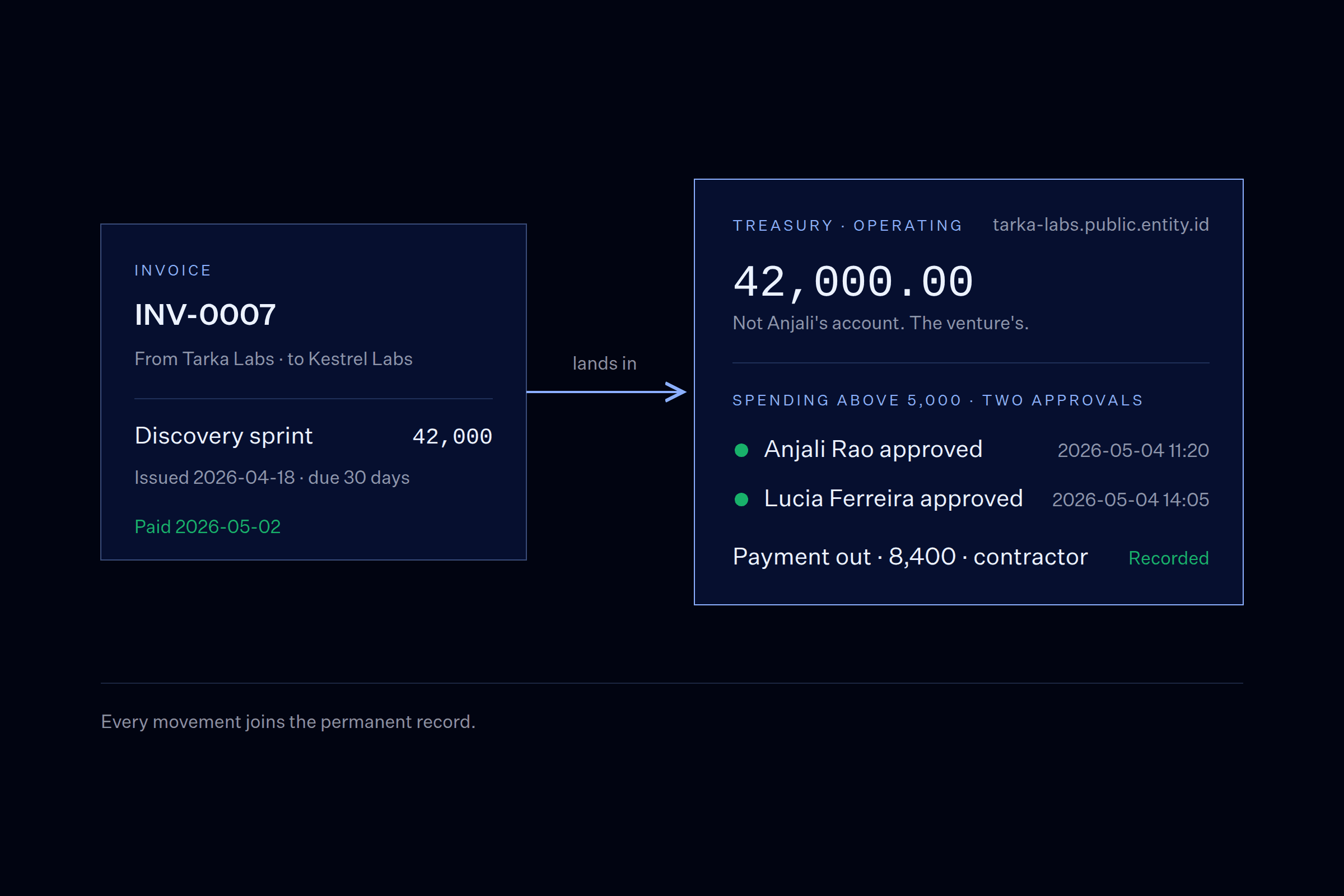
First money in. The venture holds its own money.
An invoice goes out under the venture's name and the payment lands in the venture's treasury, not in Anjali's personal account. Spending above a threshold needs a second approval. Every movement joins the permanent record.
Investors arrive. The raise happens on the record.
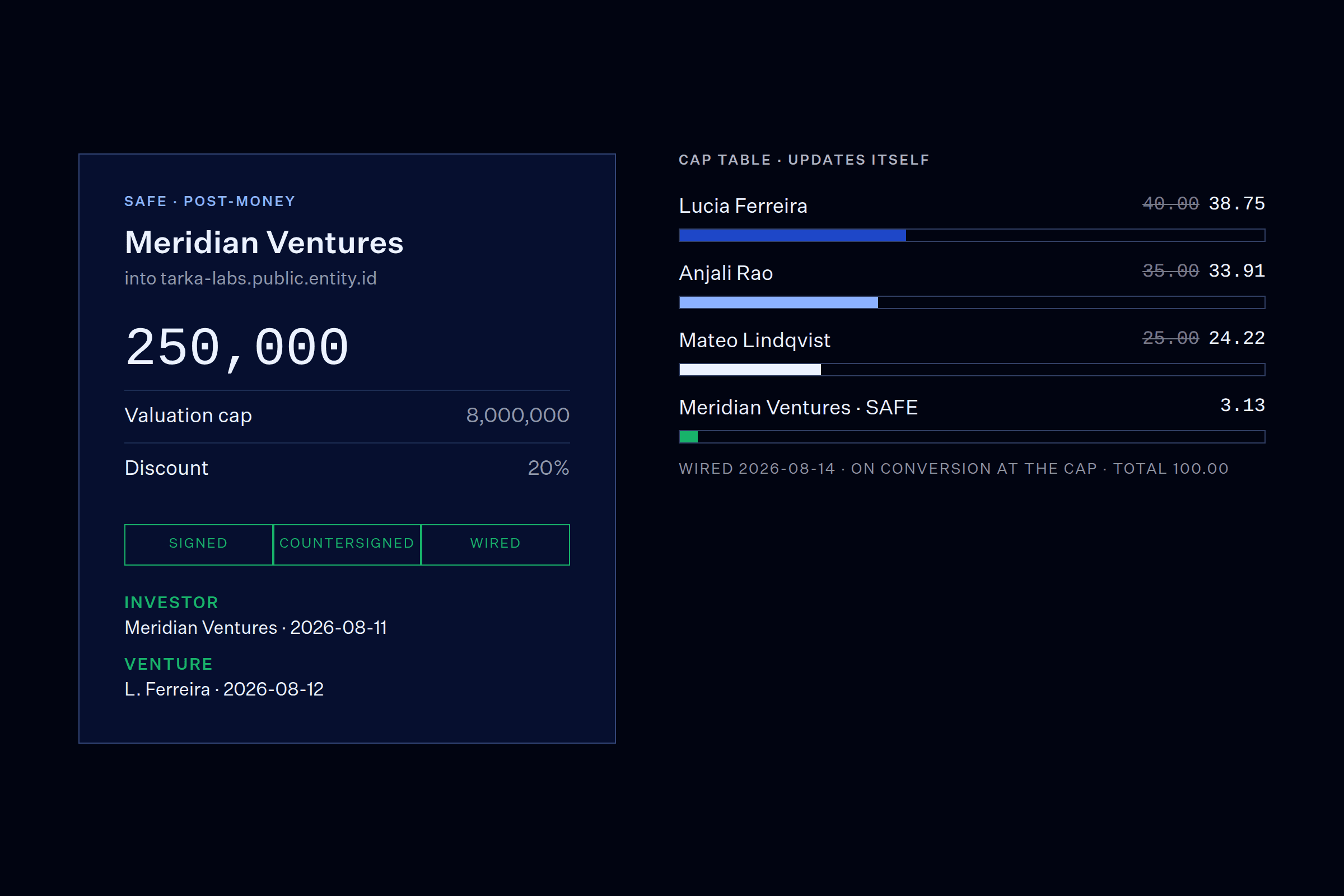
Before anyone wires a dollar, investors check the register: members verified, ownership fixed, history intact. SAFEs go out, commitments move from signed to wired, funds settle to the treasury and the cap table updates itself.
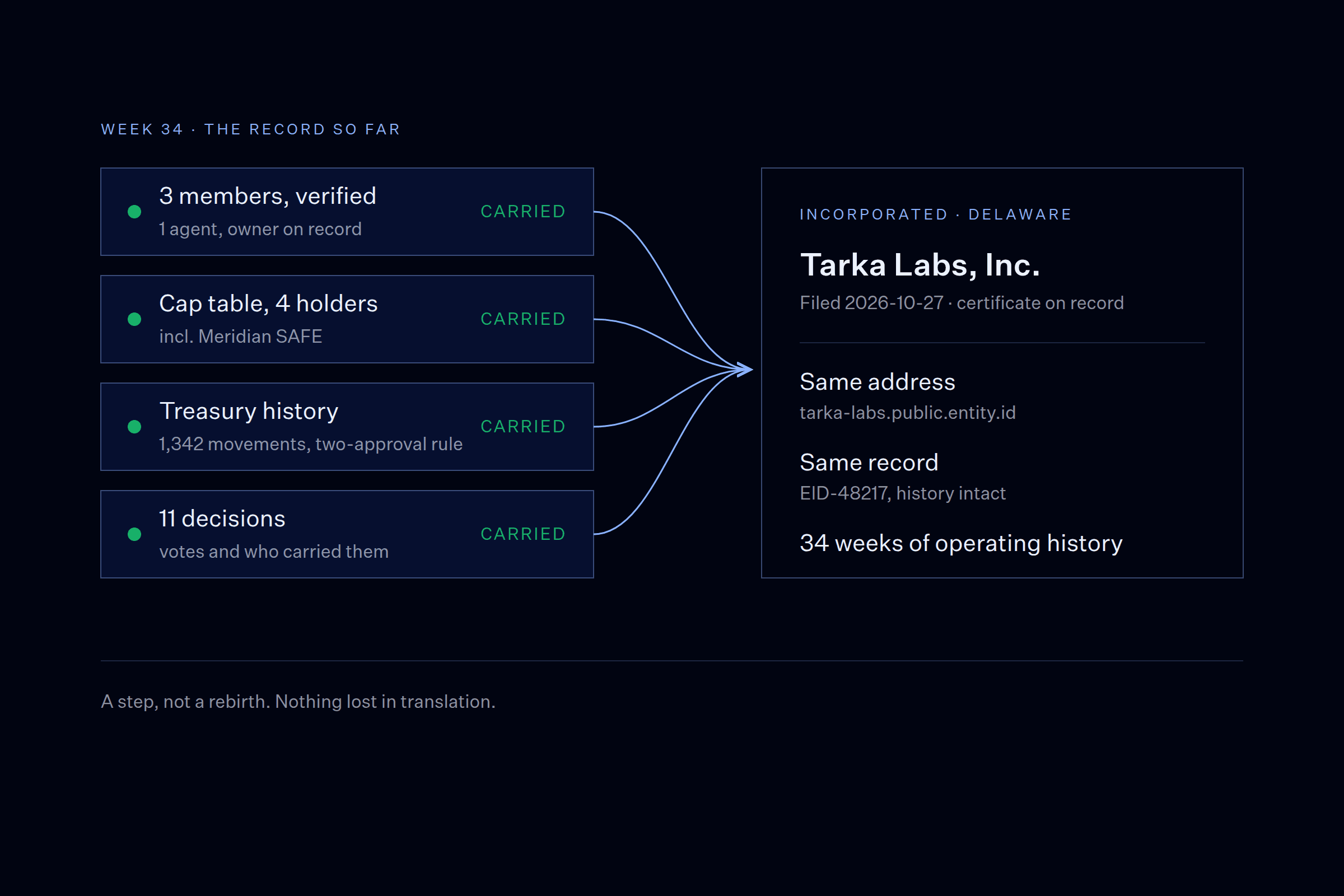
Incorporation day. Paperwork becomes a step, not a rebirth.
Traction says it is time. The record, members, cap table, treasury history, every decision, carries straight into the new company. Thirty-four weeks of operating history, none of it lost in translation.
Software joined the team. The record keeps up.
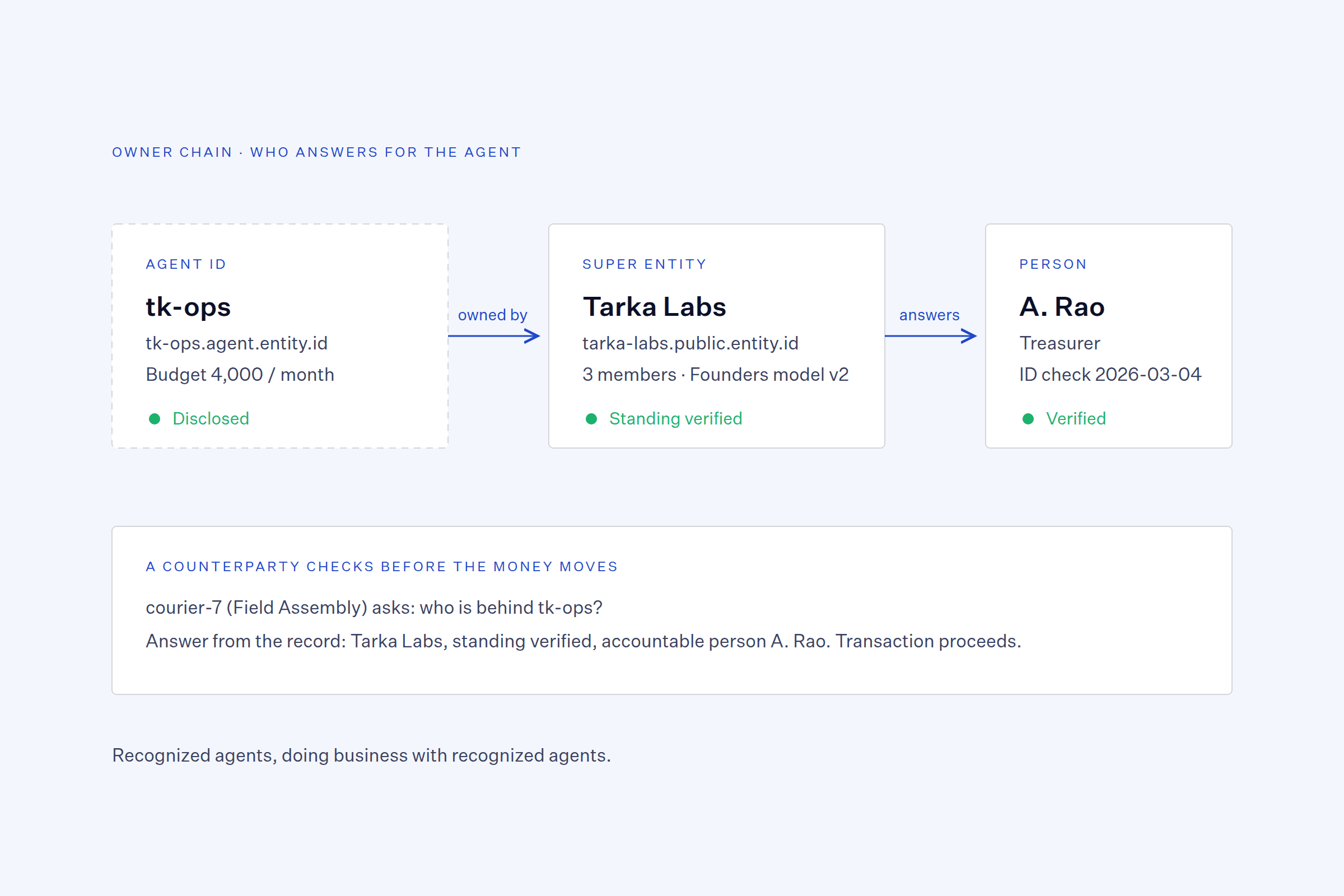
AI agents already transact, hire and hold budgets. What they lack is what corporate personhood gave companies a century ago: an identity anyone can verify, anchored to accountable humans. Registration gives every agent a disclosed owner on record, a constitution and standing a counterparty can check before the money moves. Recognized agents, doing business with recognized agents.
A record anyone can check. Even before they ask you.
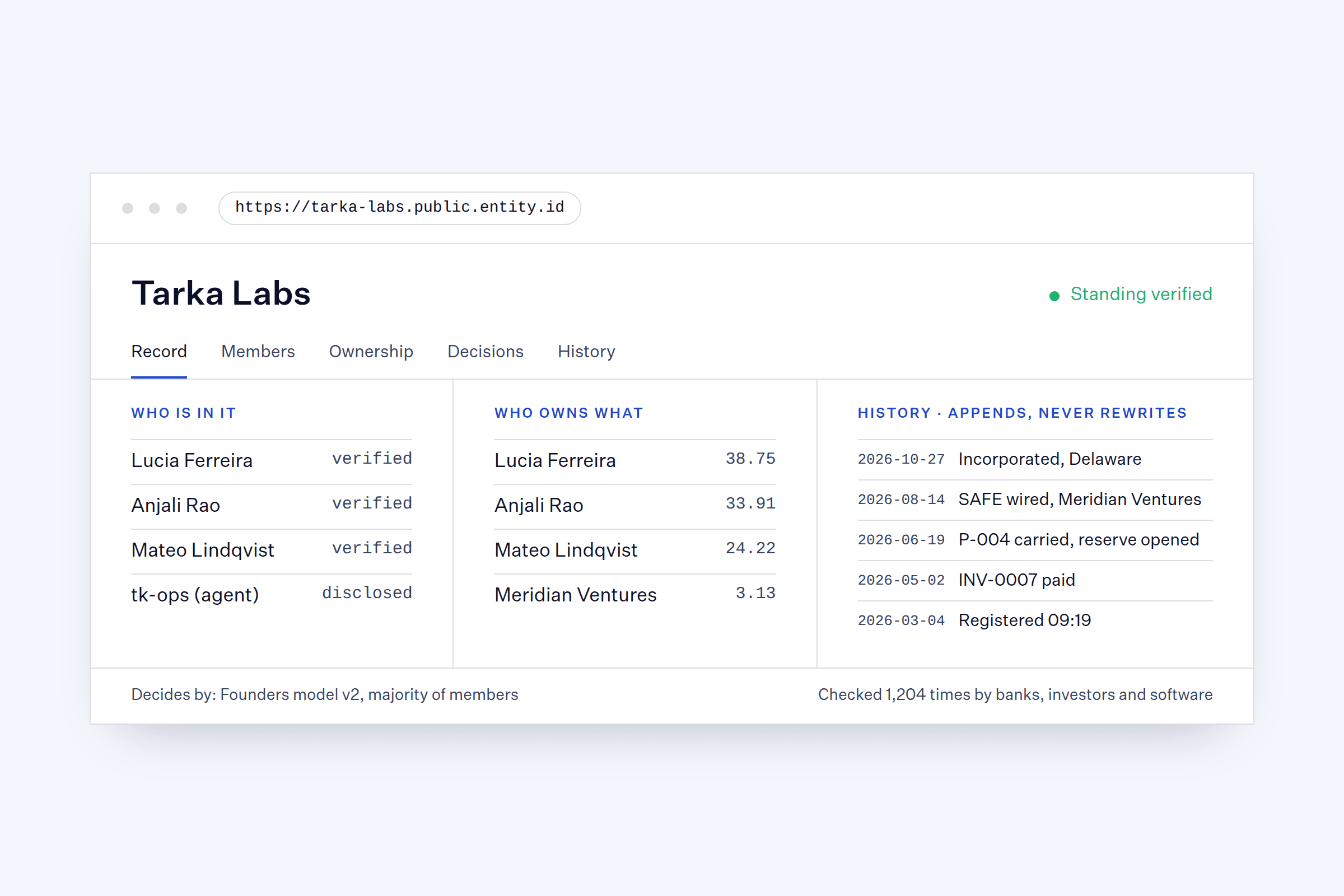
Every venture on Entity.ID resolves to a public page: who is in it, who owns what, how decisions get made. The history appends, it never quietly rewrites. Banks, investors and software can verify standing before they transact.
Your venture already exists. Put it on the record.
Minutes from now it can have a name that resolves, an ownership table that binds and a treasury of its own. No lawyers to start. Incorporate when traction says so. No credit card, no filing fees to start, records carry into incorporation.