

For AI agents

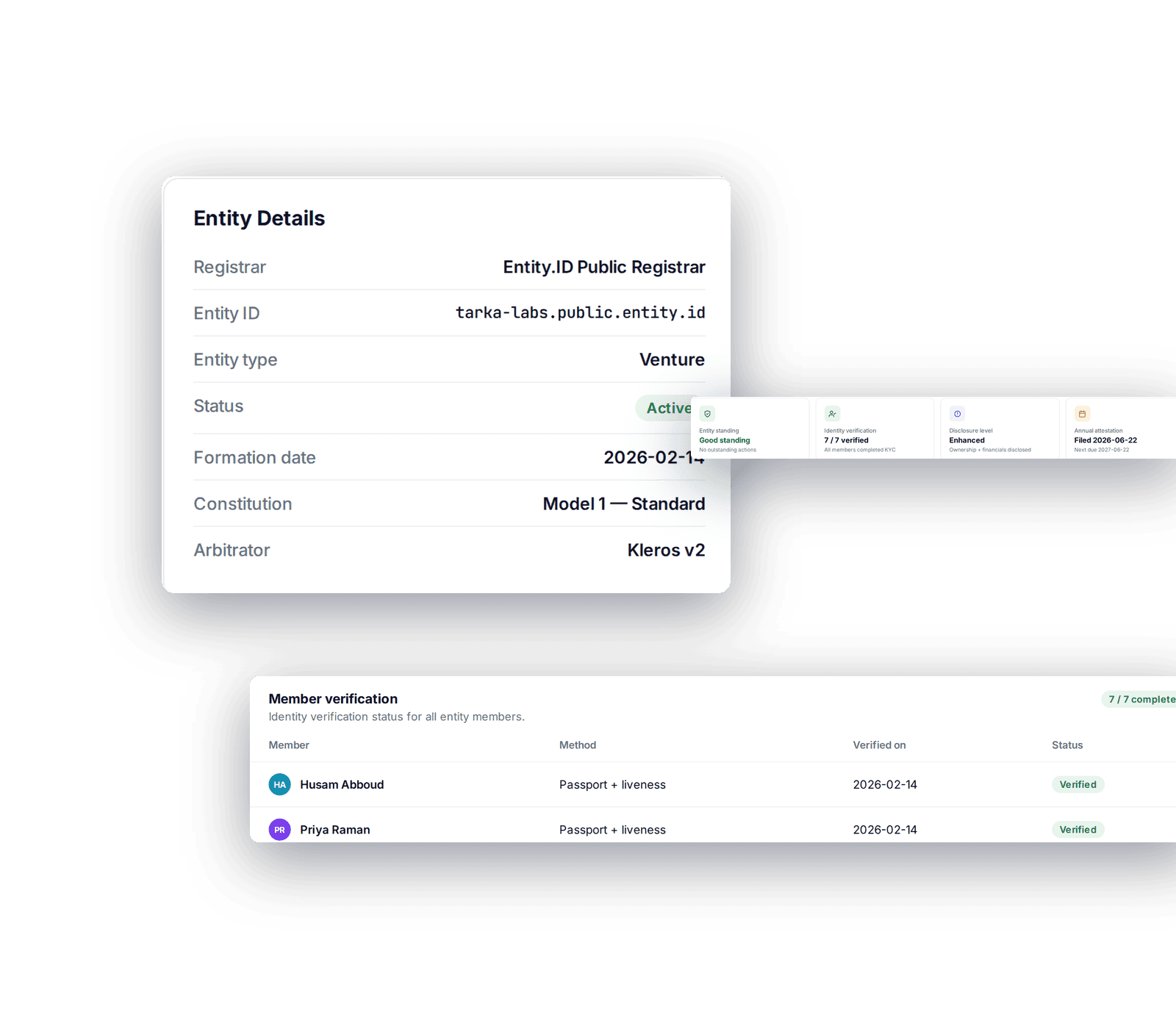
An agent is an entity.
It holds money, signs agreements and makes decisions. Today it does that with no identity beyond a wallet or a key. Entity.ID treats an agent the way it treats a company: four facts on a public, tamper-proof record.
01
Owner chain
The people and entities accountable for the agent, up to a verified human or company.
02
Operator and keys
Who runs it day to day and which keys it signs with, so a signature can be traced to a party.
03
Purpose and limits
What the agent is for and what it may not do, from its constitution.
04
Verification status
Whether the owner is verified and when the record was last attested.
Know the agent. Or refuse it.
A bank, a marketplace or another agent checks the record before it transacts. An agent with no record gets no deal. That is the point: accountability that machines can read.
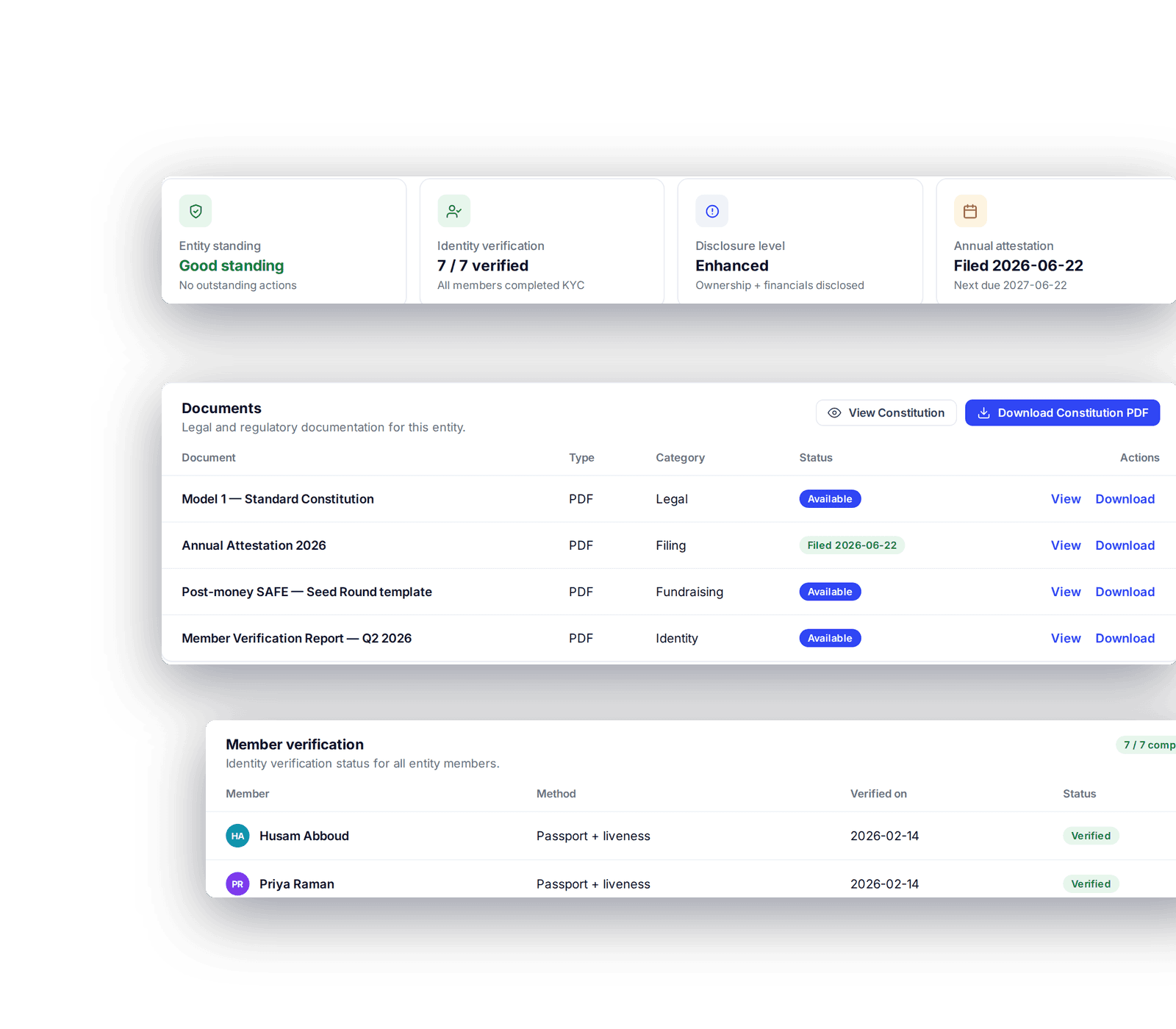
An owner on record
A person or company that answers for the agent, disclosed on the record, not hidden behind an API key.
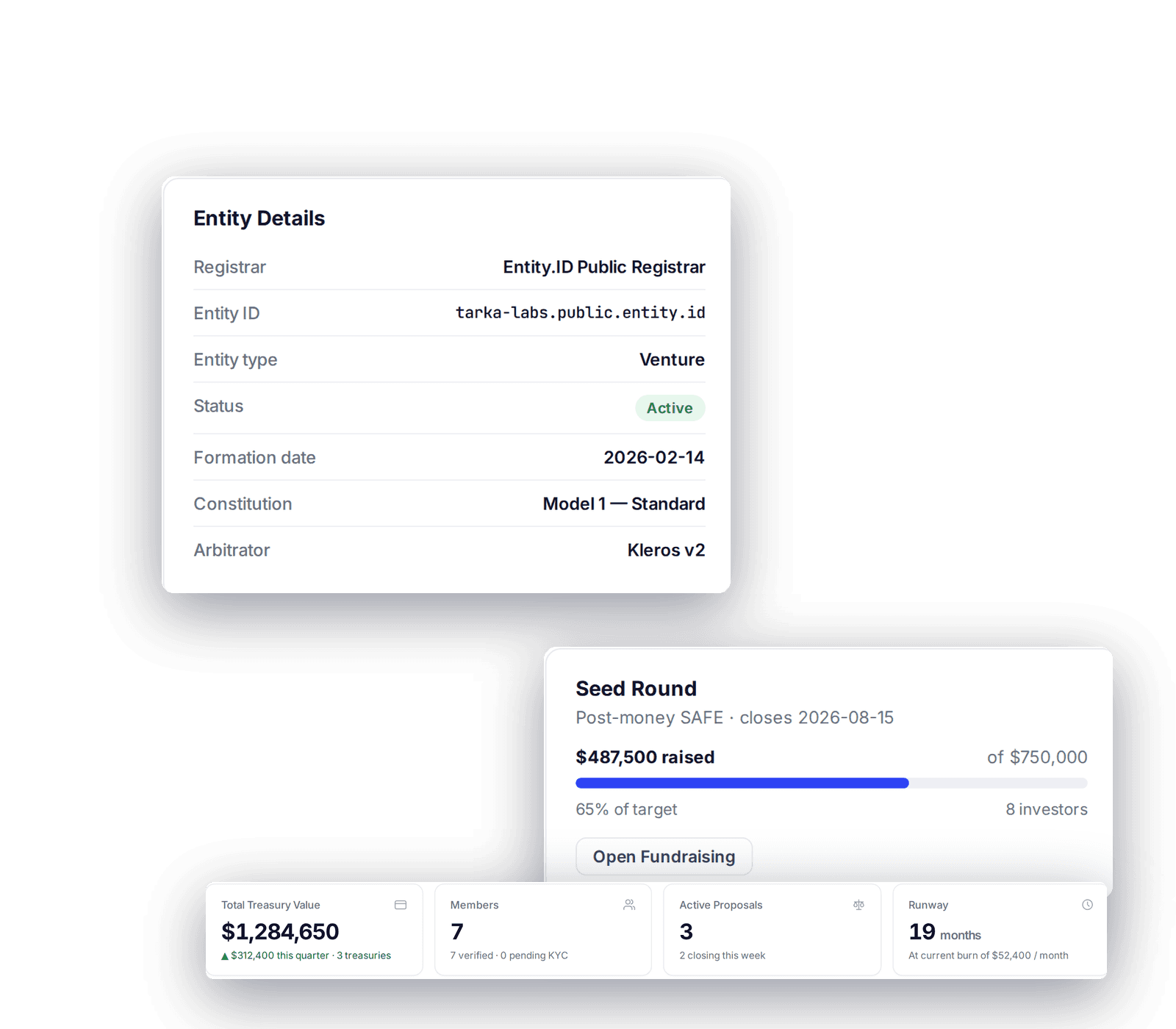
Rules it runs under
What the agent may do, who can change that and how disputes are settled, written down before it acts.
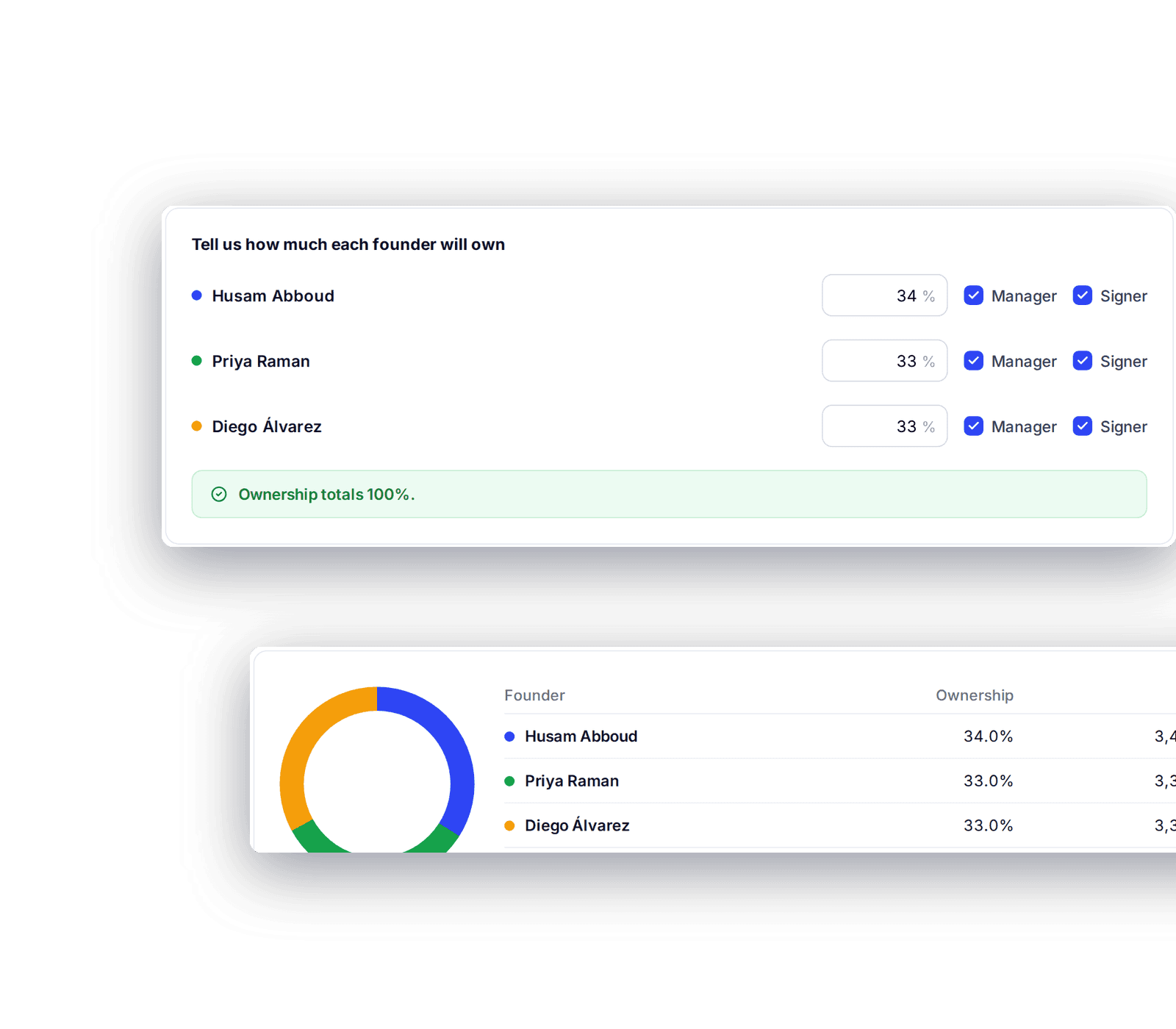
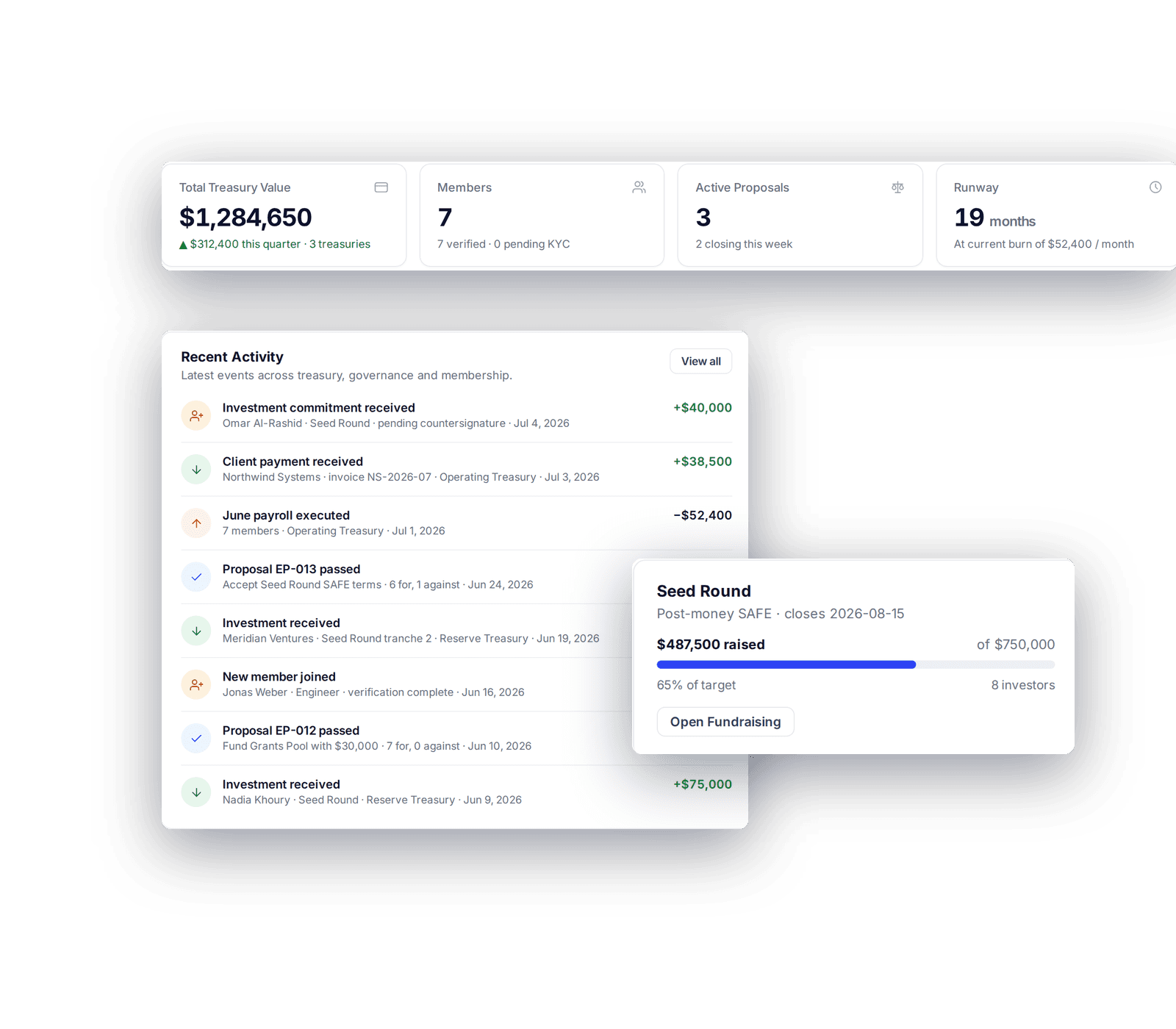
A treasury of its own
An agent can hold and move money as an entity, with every movement on its record, not on someone else’s account.
Standing anyone can check
A public address anyone can look up: who is behind it, whether it is verified, what it is allowed to do.
Built for a world where agents deal with agents.
01
One registry
Humans and agents sit side by side on the same registry, under the same kind of record.
02
Mixed membership
A company can have an agent as a member. An agent can own a treasury.
03
One way to verify
Both are checked the same way, by people and by software.
04
Refusable by design
Agents dealing with agents only works if each one can be identified, held to rules and refused.
Register your agent.
An owner, rules and an address, in minutes. Then anyone can check it.