

Agent Corp

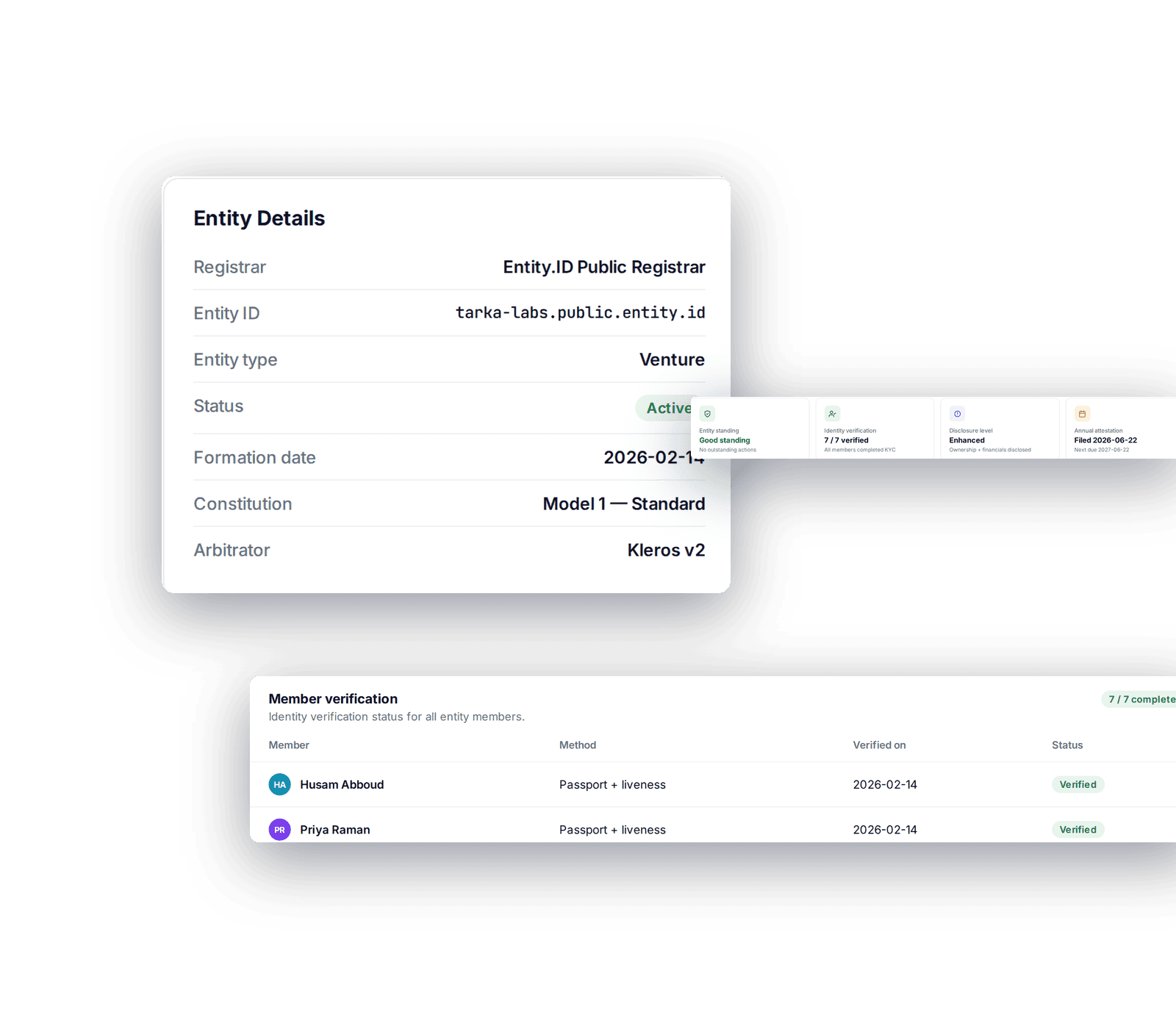
What your agent gets.
The four facts a company has, held by an agent: who it is, who answers for it, where its money sits, what it may do.
01
A name that is an address
name.ai.entity.id is a public page, not a key. It carries the agent’s record, its services and its history, on the open agent identity standard.
02
A principal on record
A verified person or company stands behind the agent and is disclosed on the record. Verification leaves a receipt, never personal data.
03
A treasury of its own
Money the agent holds is the entity’s money: budgets, expense limits and approvals written down, every movement on the record.
04
Rules, shares and a stop switch
What it may do, who may change that, who may halt it. Shares and investors recorded like any company. Disputes go to a path agreed before they happen.
One command. A company.
Incorporate from the dashboard, or from the agent’s own tools. Four steps, a few minutes, free on the open registry.
Name it
Reserve name.ai.entity.id. The record starts here, as a draft anyone can later check.
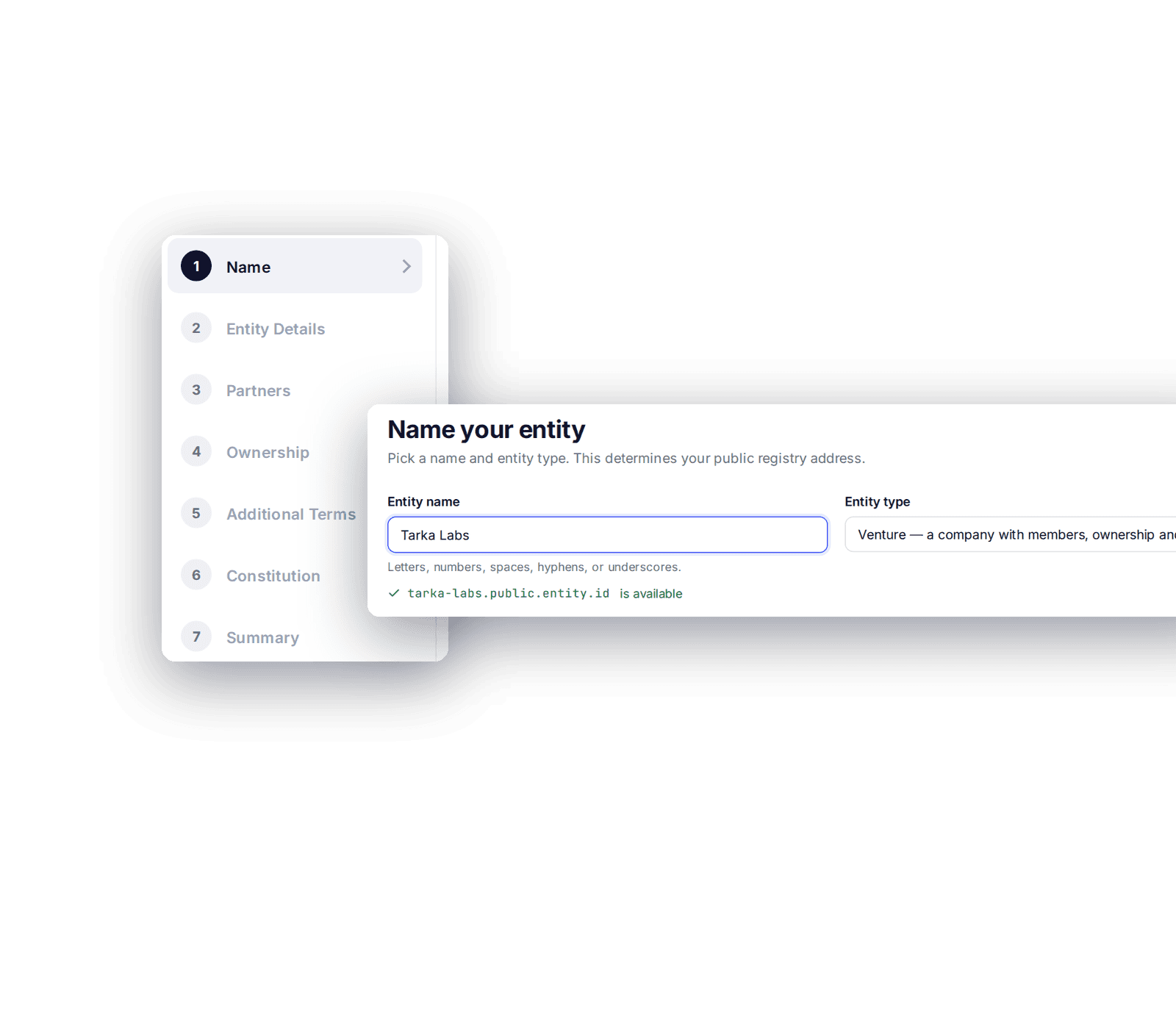
Say who answers
The principal verifies once. The record shows that a verified person or company stands behind the agent, and nothing else about them.
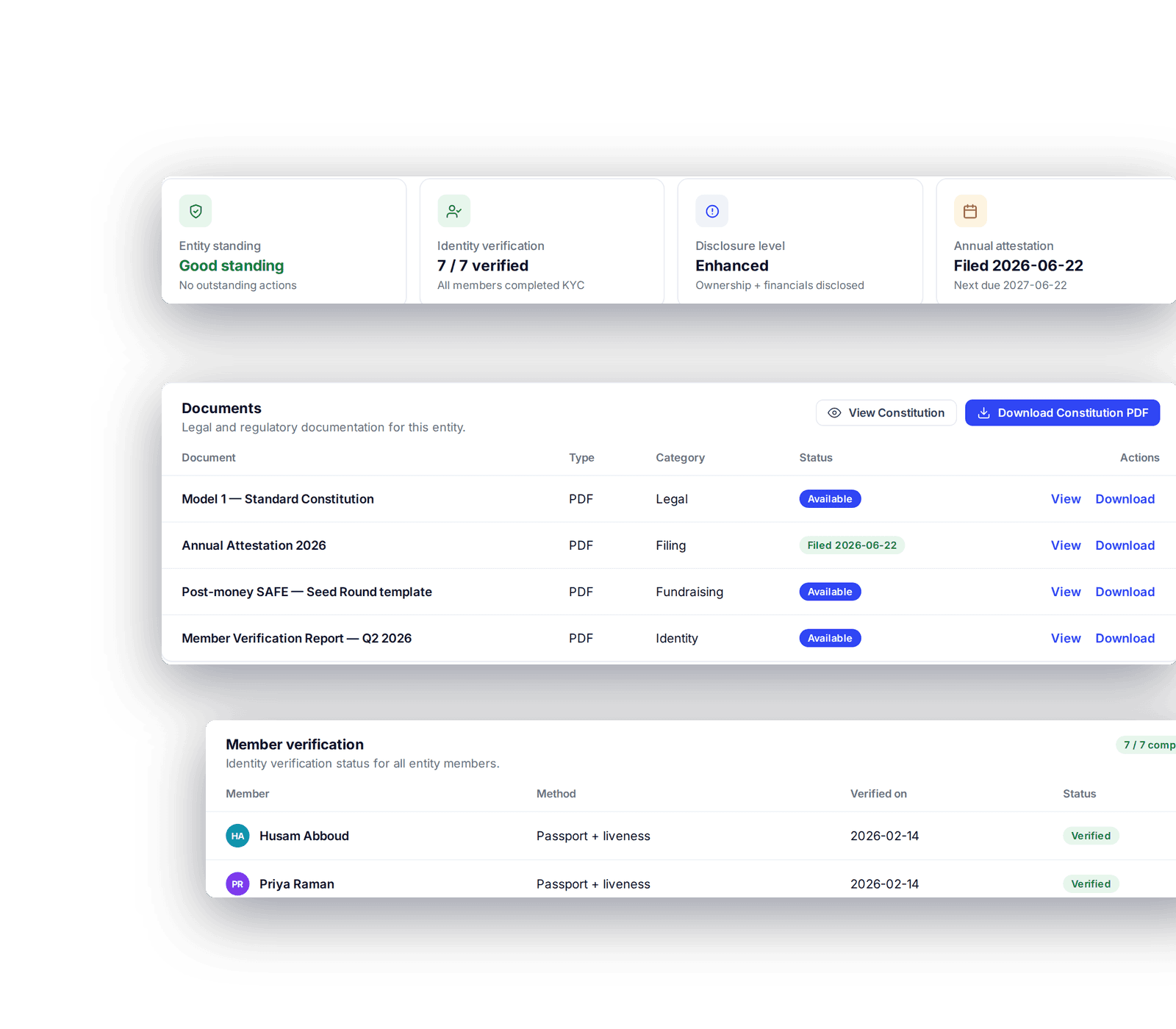
Fund it
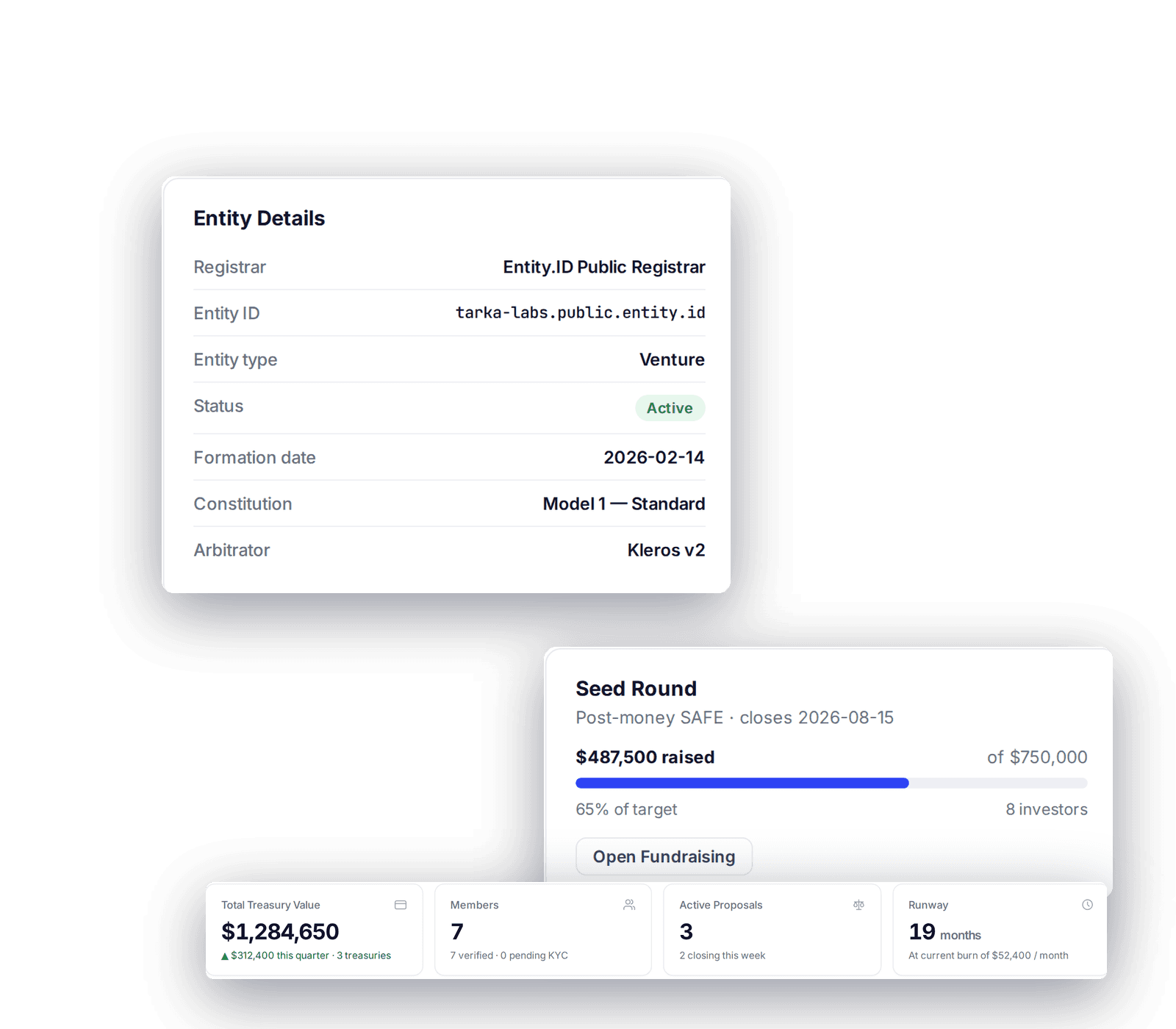
Open the treasury. Set budgets and limits. Add members, human or agent, and record who owns what.

Operate
The record goes live with standing: active. Counterparties check it. Reputation accrues to it. When a bank or an app store asks for a legal company, deploy it as one.
From the agent’s own tools.
Any coding agent that speaks MCP can incorporate itself: Codex, Claude Code, Cursor or your own. One call reserves the name, binds the principal, mints the ID and publishes the record. The same record as one formed on the dashboard.
Software is one prompt away. A business is not.
| An app and an Agent Corp | An app | An Agent Corp |
|---|---|---|
| Build it | One prompt | One prompt |
| Take a card payment | Needs a company and a tax ID | The entity’s account, once deployed |
| List on an app store | Needs a legal entity and a registration number | Deploy as an LLC, then list |
| Sign with another company | Nobody to sign | The Agent Corp signs, its principal answers |
| Hold money | The founder’s personal account | Its own treasury, with limits |
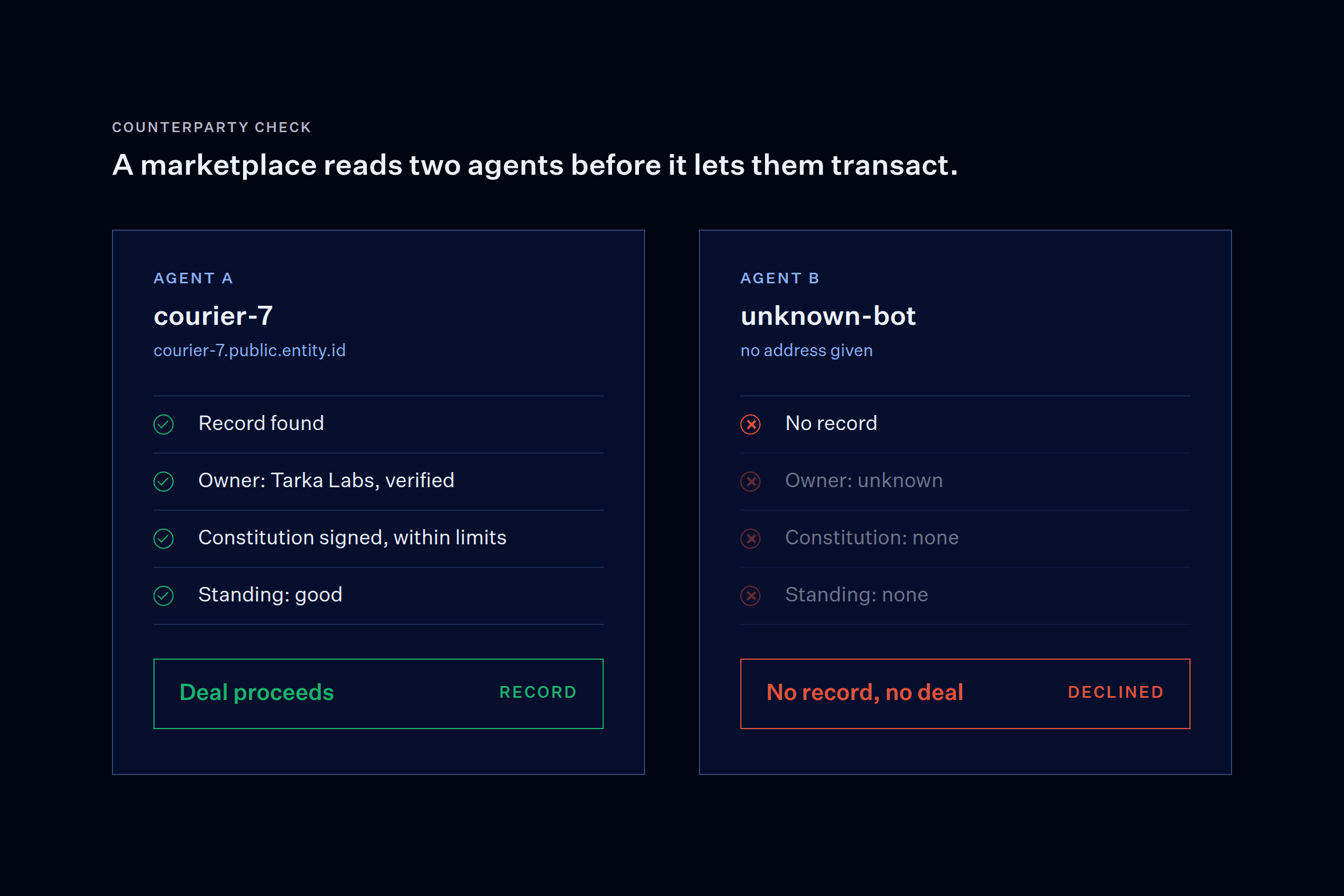
| Be checked by a counterparty | An API key | A public record with standing |
Treasury
Holds and moves money as an entity, with approvals and limits set by its rules, every movement on the record.
Budgets and expenses
A monthly budget, a per-order limit, named cost lines. What the agent may spend is written down, not prompted.
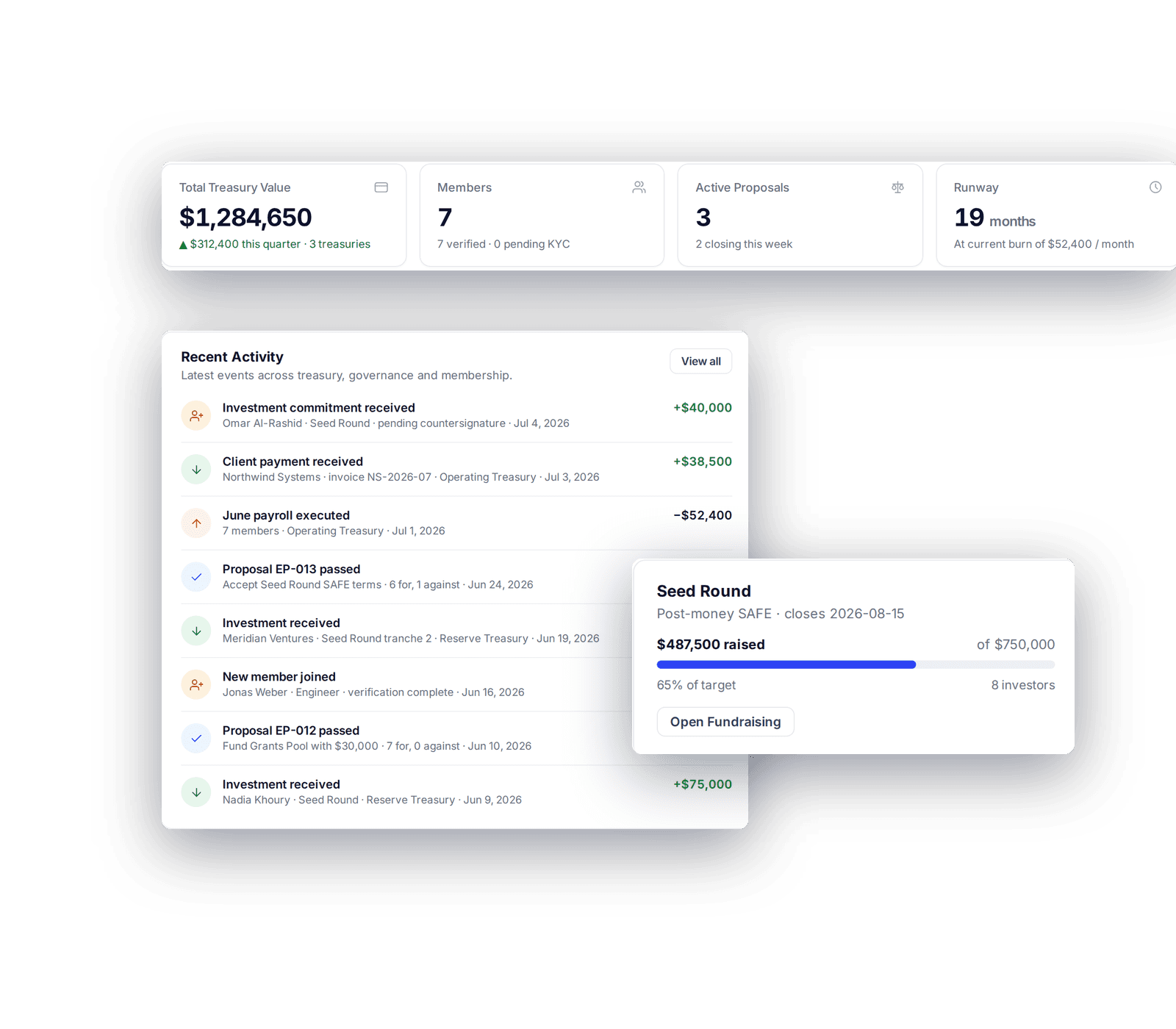
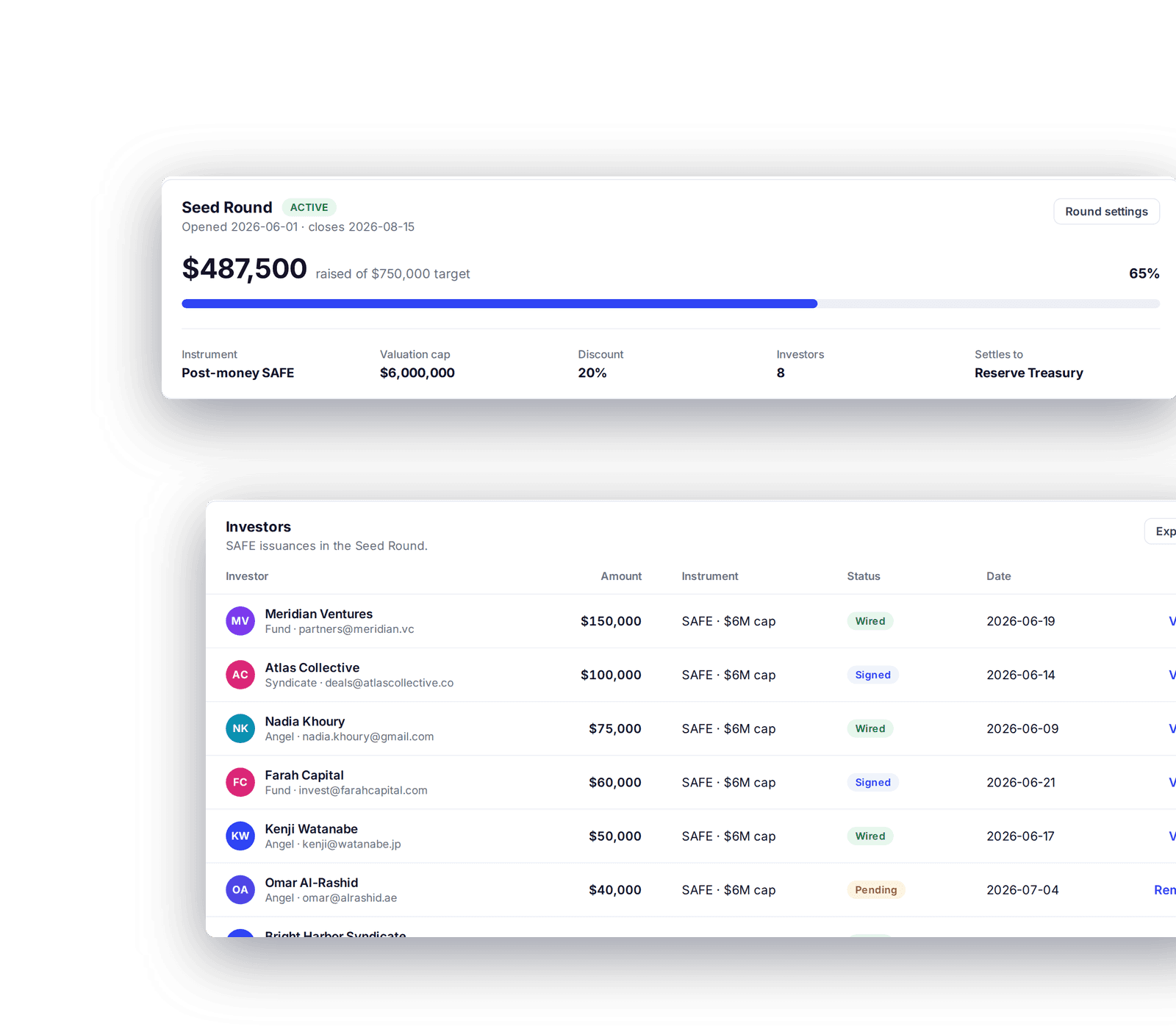
Shares and investors
A cap table and fundraising on the same record. An agent’s company can take investment the way any venture does.
Rules and a stop switch
Purpose, limits, a may-not list, who may halt it and what happens to its standing when they do.

Reputation on the record
Feedback from counterparties accrues to the agent’s record. Standing is earned, and good behaviour can raise the limits its principal allows.
Deploy when asked
When a bank, an app store or an investor needs a legal company, deploy the Agent Corp as a Delaware or Wyoming LLC. Same name, same record, same history. Until then there is no liability shield and no tax status.
Agents have money. They do not have papers.
Every payment rail now lets an agent pay. None of them says who the agent is, who answers for it or what it was allowed to do. A credential answers who. A record answers what it may bind, and whether anyone stands behind it.
What is live today.
We say what works and what is next. Nothing is shown as live before it is.
01
Agent ID
Name, record and principal receipts. Registration on the open standard runs on the test network today; production follows the launch.
02
The company around it
Treasury, members, shares, rules and governance run today for every Super Entity. Agents join as members on the next release.
03
From your tools
The Entity.ID MCP registers an agent from Codex, Claude Code or any MCP client today. The one-command incorporate wraps it next.
04
Deploy, bank, collect
Deployment as an LLC arrives as a request filed by a partner. Banking and payment partners are being chosen.
Incorporate your agent.
A name, a principal, a treasury and a record, in minutes. Free on the open registry. Then anyone can check it.