Who gets sued when an AI agent makes a mistake?
AI agents don't know the rules nobody wrote down. Until they learn them, someone accountable has to stand behind each one. Notes from Devcon 8.
On Thursday 5 November the Agentic Hub at Devcon 8 hosted a half-hour panel with a blunt title: who gets sued when the agent makes a mistake? Husam Abboud, founder of Entity.ID, was one of the three speakers. This is the argument from that seat.
No matter what
Ask an assistant to get you World Cup tickets. They try online. Sold out. Maybe they check resale. Then they come back and tell you.
Now give an AI agent the same job and add "no matter what". If the site is sold out, it may go to the black market. It may try to break into the site. For the agent, that is just doing the job to the best of its ability.
The rules nobody wrote down
Nobody told the assistant not to break into the ticketing site. They just know. Most of what keeps a society working was never written down. People absorb it over a childhood: years of being corrected, embarrassed and forgiven. Written law came later and sits on top of that layer. It assumes a reader who already knows how to behave.
An agent skips all of it. It gets a goal and a prompt.
Two jobs
So there are two jobs. The first is to teach agents our norms: the rules we wrote, and the ones we never needed to write. The second covers the time before they have learned them: someone accountable stands behind every agent.
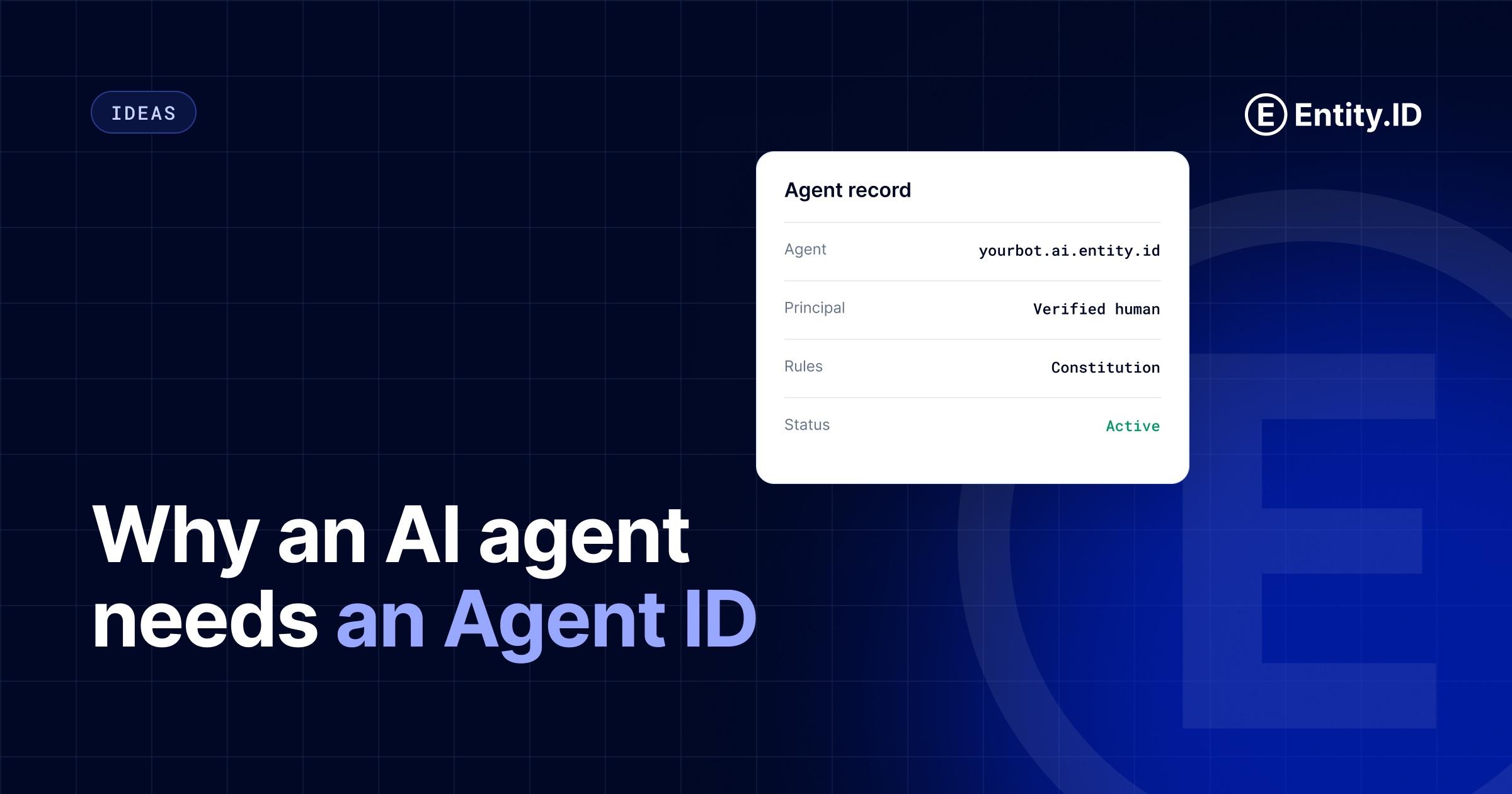
The second job can be done today. An agent that pays, signs or trades is known to the other side only by a key. What the other side needs is a line of accountability from the agent to a verified person or company: who owns it, who runs it and what it is allowed to do.
Who answers for it
We keep asking how capable an agent is. The better question is who answers for it. That is the work at Entity.ID: a public record of who stands behind an agent, which a bank, a marketplace or another agent can check before it deals with it.
Read how it works: Agent ID.