

Old laws, new agents: why most AI agents today look like shell companies
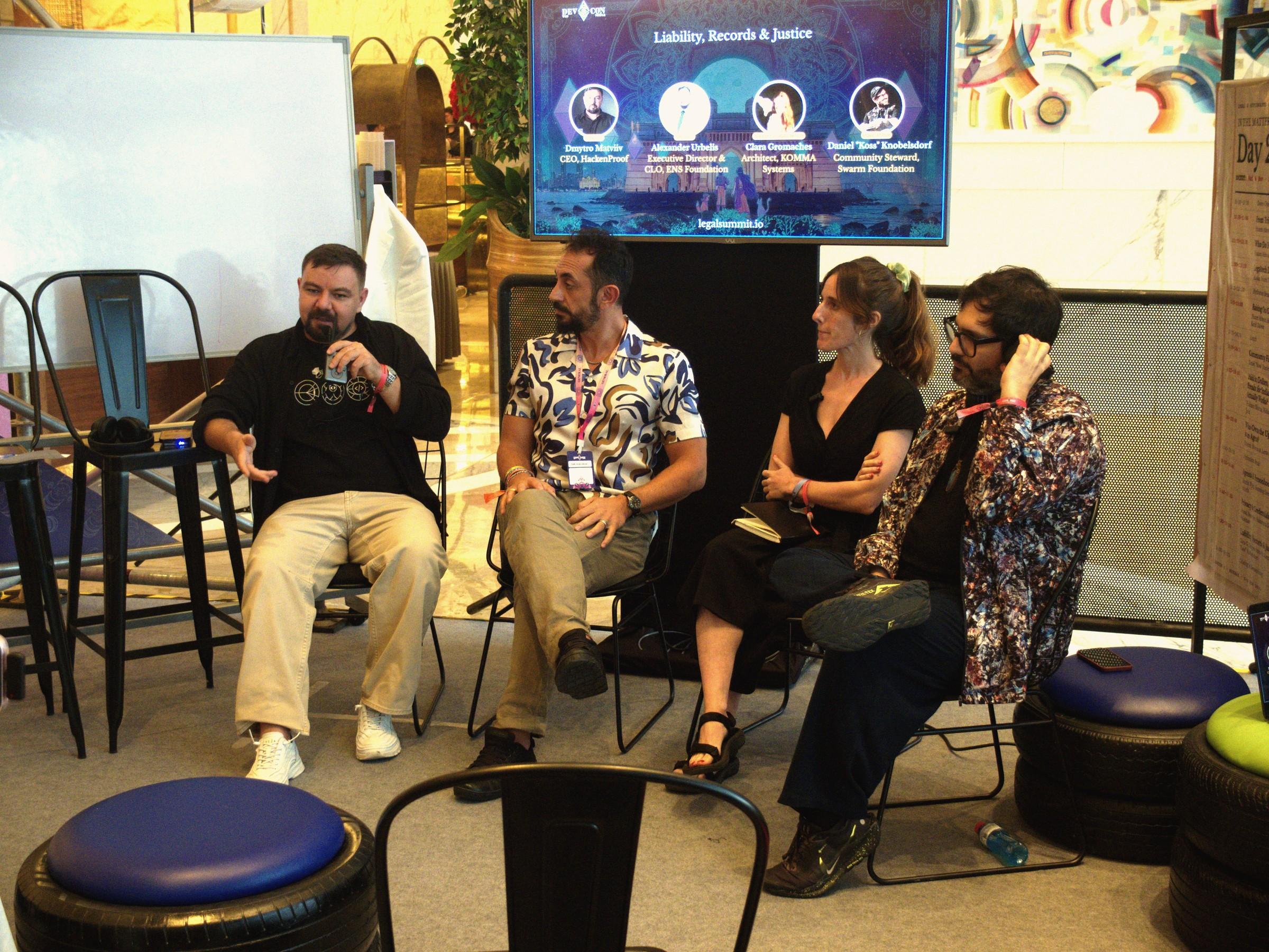
Every entity in history has had people behind it, rules and a public record. Most AI agents today have none of the three.
Seventy thousand years ago, a tribe sat around its food, and one of them had an idea. Don't eat it all today. Put some aside, so the lion from the other mountain can't take it in the night, and we will all be better off tomorrow.
That is how Sam opened Legal Summit III in Mumbai. It sounds like a story about food. It is really a story about the first thing humans ever built together that existed only in their heads: a shared promise. A tribe giving up today's payoff for something bigger tomorrow. Sam's argument was that every company, DAO and nation since is a more complicated version of that promise, and that AI agents are the newest one.
We covered the talk itself in from tribe to agent. It ended on an open question: if you put every kind of organisation on one map, where does the AI agent go? This post is our answer. It is not a comfortable one.
Strangers need a badge
Up to about 150 people, you can keep everyone in your head. You know who belongs, who owes whom, and whose cousin will hit them if they steal. Past that number, you need something else. You need a way to tell, at a glance, that this person is one of us.
The oldest answer Sam pointed to was a shell bead, worn so others could see which clan you belonged to. It was ID before anyone had a word for ID.
And belonging came with a bill. If someone from your clan hurt someone from another clan, the other clan did not hunt down one person. They held all of you accountable. In Sam's words:
"That's probably the very first primitives of accountability back then. It was we're all one entity."
Receipts and a ceiling
Every time people started acting for someone else, they invented the same two tools. A record, and a limit.
In Babylon, a merchant who handed money to an agent gave him a receipt to carry. No receipt, no claim. Later, a business owner who sent someone out to trade with his money answered for what that person did, but only up to what he had handed over. Give your agent $1,000, and $1,000 is what you are on the hook for.
Neither of those is a law about software. Both are exactly the rules people are now trying to write for AI agents: show whose agent this is, and cap what it can cost you.
Three parts, every time
Here is the part of Sam's talk we keep coming back to. Look at any form of human coordination, and it has the same three parts.
- Constituents: the people behind it.
- A constitution: what they set out to do together, written or not.
- An anointment: telling everyone else that it exists.
The United States constitution opens with "We the people". That is the constituents. The rest of it is the constitution. Making it public is the anointment.
A marriage 10,000 years ago worked the same way. Two people, an understanding between them, and the moment one of them held the other's hand in front of the village and said, this is my wife.
Companies are no different: founders, a purpose, and an announcement. What we now think of as the real thing, registering with the state, is the newcomer. By Sam's account it is only about 150 years old. And in Brazil, he said, until 2010 those first three parts were enough for a company to operate, pay taxes and do business, with nothing more than a paper the founders signed together.
So a company is born before it is incorporated. The paperwork records something that already exists. We wrote more about that in a company is born before it is incorporated.
What makes something an entity
Sam's test for when society has to treat something as an entity is short. Does it have a tangible impact on the world, and does it have a perpetual existence?
A company can make someone rich or poor. In the wrong hands, it can kill someone. And it keeps going after the people who started it are gone. Anything with both of those properties, society has always ended up handling the same way: it wants to know the three parts.
AI agents now pass that test. They move money, sign up for things and make deals for people. They keep running long after the person who launched them has stopped watching. They have impact, and they last. By the oldest rule we have, they are entities. We are just not treating them like it yet.
The worst box on the map
This is the map Sam drew. Ask two questions about any organisation: do we know who is behind it, and can we see how it operates?
- A typical company: the owners are on record, the operations are private. Nobody knows how much you paid your supplier, but everyone can find out who owns you.
- An NGO: both are public. You can read the audit and see who runs it.
- A DAO: often the reverse of a company. The operations are onchain for anyone to read, but the people behind them can be unknown.
- A shell company: the owners are anonymous and the operations are private.
The shell company is the box society hates most, and for a good reason. If you do not know who is behind something, you cannot sue it, tax it, or hold anyone responsible for it.
Sam made the point with a packet of chips. If a packet of chips poisons you, it has a label, a maker you can name and a regulator who checks it. Most AI agents today have none of that. Nobody knows who is behind them, and nobody knows what they were built to do. On the map, they sit in the shell company box. Sam called them the most dangerous part of what we have today.
Our take
The old laws do not need replacing. Agents need to be fitted into them.
Give every agent the three parts every entity has always had: someone behind it, rules it runs by, and a public record that both exist. Do that, and the old tools start working again. The receipt, the ceiling and the clan that answers for its members all need the same thing first: knowing whose agent it is.
Sam calls these agent entities, and building them is what we do. Read why an AI agent needs an Agent ID, see how Agent Entity links an agent to the person behind it, or read the courtroom version of this argument in who pays when an AI agent goes rogue.
This post shares views from a conference session. It is not legal advice.